
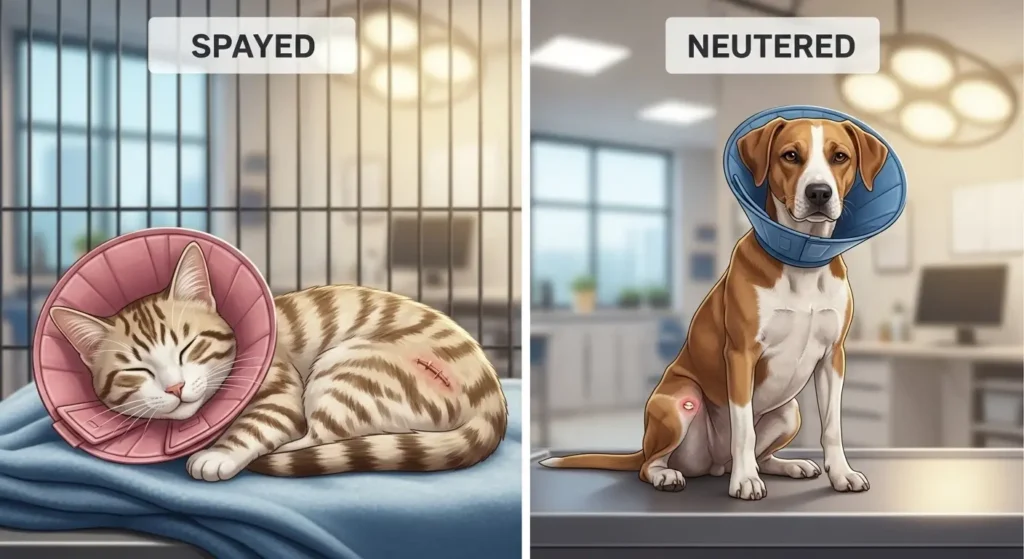
Many people search for the keyword “spayed or neutered” when they visit a vet, adopt a pet, or read animal care advice online. The confusion usually comes from not knowing what the terms really mean, when to use each one, and if the spelling or wording changes in different countries.
Some users also wonder if “spayed” and “neutered” mean the same thing or refer to different procedures. This creates uncertainty, especially for first-time pet owners who want to make the right decision for their cats or dogs.
In simple terms, “spayed or neutered” refers to a medical process that prevents animals from reproducing. However, the terms are often used differently depending on the animal’s sex and regional language habits.
This article clears up all confusion. You will learn the exact meaning, the history of the words, spelling differences, common mistakes, and correct usage in real life. By the end, you will understand when to use each term correctly and confidently in both casual and formal contexts.
Spayed or Neutered – Quick Answer
“Spayed or neutered” means a pet has been surgically sterilized so it cannot reproduce.
- Spayed = female animals (removal of ovaries/uterus)
- Neutered = male animals (removal of testicles)
Examples:
- The cat was spayed at six months old.
- The dog was neutered to prevent unwanted litter.
- Most shelters require pets to be spayed or neutered before adoption.
Psalm or Psalms: Meaning, Difference, and Correct Usage?
The Origin of Spayed or Neutered
The word “spay” comes from the Old French word es peer, meaning to cut or sterilize an animal. Over time, it became a standard veterinary term in English for female animals.
The word “neuter” comes from Latin neuter, meaning “neither one nor the other.” In biology, it refers to removing reproductive ability in male animals.
These words developed in veterinary science during the 18th and 19th centuries as animal care became more formalized. Today, both terms are widely used in pet care, shelters, and veterinary medicine worldwide.
British English vs American English Spelling
In this case, the spelling difference is not about “spayed or neutered” itself but how the terms are used in English regions.
- American English uses both “spayed” and “neutered” commonly in everyday speech.
- British English often uses “neutered” more generally for both males and females, though “spayed” is still understood in veterinary contexts.
Losses or Loses: What Is the Correct Spelling ?
Comparison Table: Usage Differences
| Region | Female Animals | Male Animals | Common Usage |
| USA | Spayed | Neutered | Very common separation |
| UK | Neutered (also spayed) | Neutered | “Neutered” used for both |
| Canada/Australia | Spayed / Neutered | Neutered | Mixed usage |
Which Spelling Should You Use?
Your choice depends on your audience:
- US audience: Use “spayed” for females and “neutered” for males.
- UK/Commonwealth audience: “Neutered” is often enough for both, but “spayed” is still correct.
- Global writing: Use both terms (“spayed or neutered”) for clarity.
For blogs, pet guides, and veterinary content, using both terms is the safest and clearest option.
Common Mistakes with Spayed or Neutered
- Using “neutered” for only male animals without clarification
- Thinking “spayed” means general sterilization for all pets
- Mixing spelling with meaning (there is no alternative spelling like “spaid”)
- Assuming the terms mean temporary birth control (they are permanent)
- Using “fixed” without explaining it in formal writing
Spayed or Neutered in Everyday Examples
Emails:
- “Please confirm if your pet has been spayed or neutered before the appointment.”
News:
- “The city shelter reported that over 80% of adopted pets were spayed or neutered.”
Social Media:
- “Got my puppy neutered today. Recovery is going well!”
Formal Writing:
- “All animals must be spayed or neutered prior to adoption approval.”
Spayed or Neutered – Google Trends & Usage Data
Search interest for “spayed or neutered” is highest in countries with strong pet adoption systems, especially the United States, Canada, and the United Kingdom.
- USA: Very high search volume due to shelter requirements
- UK: Moderate search volume, more general “neutered” use
- Australia/Canada: Steady interest in pet care education
Most searches come from pet owners looking for definitions, costs, age recommendations, and medical safety information. The keyword is most popular in veterinary education and adoption-related content.
Keyword Variations Comparison Table
| Variation | Meaning | Usage Context |
| Spayed | Female sterilization | Cats, dogs (female) |
| Neutered | Male sterilization | Cats, dogs (male) |
| Fixed | Informal term | Casual speech |
| Sterilized | Medical/general term | Veterinary and scientific writing |
FAQs
1. What does spayed or neutered mean?
It means a pet has been surgically sterilized to prevent reproduction.
2. Is spaying the same as neutering?
No. Spaying is for females, neutering is for males.
3. At what age should pets be spayed or neutered?
Usually between 4 to 6 months, but it depends on the vet’s advice.
4. Is it safe to spay or neuter a pet?
Yes, it is a common and safe veterinary procedure.
5. Does neutering change a pet’s behavior?
It can reduce aggression, roaming, and mating behavior.
6. Can a pet get pregnant after being spayed?
No, spaying is permanent and prevents pregnancy.
7. What is the cost of spaying or neutering?
It varies by country, clinic, and animal size.
Conclusion
Understanding the term “spayed or neutered” is important for every pet owner. It refers to a safe and permanent medical procedure that prevents animals from reproducing. While “spayed” is used for female pets and “neutered” for males, the terms are often combined in everyday language to simplify communication. Different regions use these words slightly differently, but the meaning remains the same everywhere.
Knowing when and how to use these terms helps you communicate clearly with vets, shelters, and other pet owners. It also helps you make informed decisions about your pet’s health and future.
If you are reading adoption papers, veterinary advice, or online articles, this knowledge ensures you fully understand what is being said. In short, “spayed or neutered” is a simple but essential concept in responsible pet care, and using it correctly improves both communication and animal welfare understanding in everyday life.

Hi, I’m Henry James, the author behind GrammarTribe.com. I’m passionate about the English language and specialize in grammar, helping readers understand complex rules in a simple, clear way. Over the years, I’ve dedicated myself to creating content that makes learning grammar practical, fun, and accessible for everyone. If you’re a student, professional, or language enthusiast.
Through GrammarTribe.com, I share tips, guides, and examples to help people write confidently and correctly. My goal is to make grammar less intimidating and more useful in everyday writing, emails, social media, and professional communication. Writing and teaching grammar isn’t just my profession — it’s my passion.
When I’m not writing, I enjoy reading, exploring language trends, and discovering new ways to make English learning engaging and easy. My mission is to empower readers to communicate clearly and confidently, one grammar tip at a time.