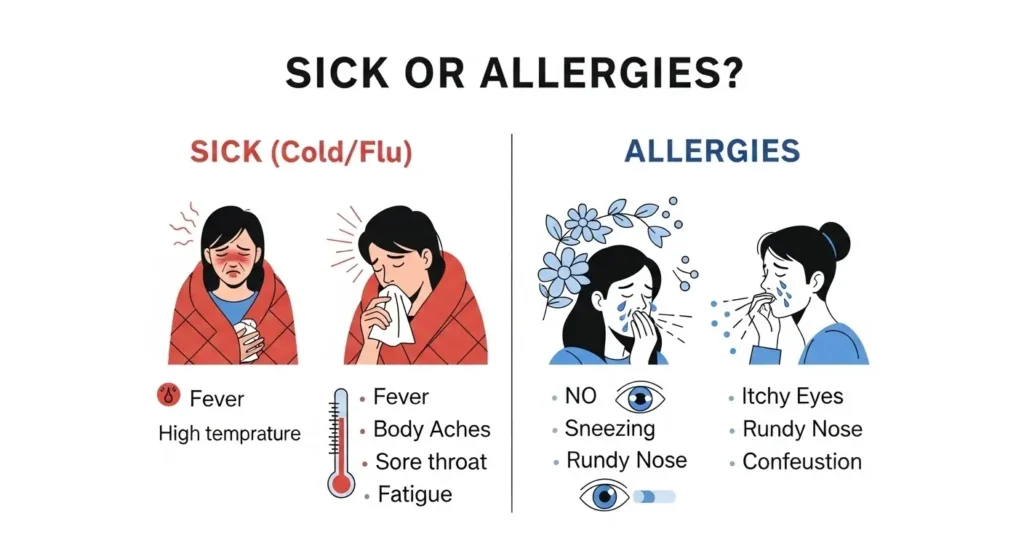
Feeling unwell can be confusing. Are your symptoms a sign that you’re sick, or are they caused by allergies? Many people search for “sick or allergies” because distinguishing between the two can be tricky. A cold or flu often brings fever, fatigue, and body aches, while allergies usually trigger sneezing, itchy eyes, and a runny nose without fever.
Understanding the differences can help you choose the right treatment and avoid unnecessary medications. This guide explains how to tell if you’re sick or suffering from allergies, provides examples, and gives practical advice for everyday situations. Whether you’re writing about your health online, checking symptoms, or helping family members, this article clears the confusion and gives professional guidance.
Sick or Allergies – Quick Answer
- Sick: Caused by viruses or bacteria; often includes fever, fatigue, and body aches.
Example: “I caught a cold and feel sick with a fever.” - Allergies: Caused by an immune response to allergens; usually sneezing, itchy eyes, runny nose, no fever.
Example: “I feel fine except my eyes are itchy because of pollen.”
Quick Tip: If you have a fever or body aches, you’re likely sick. If symptoms are mainly sneezing or itchy eyes, allergies are more likely.
The Origin of Sick or Allergies
The word “sick” comes from Old English sēoc, meaning ill or unwell. “Allergy” originates from Greek allergia, meaning “altered reaction.” These words evolved over centuries to describe physical reactions: one due to illness, the other due to immune sensitivity. Understanding their origins highlights why they describe different conditions but are often confused in casual conversation.
British English vs American English Spelling
| Term | British English | American English |
| Sick | Sick | Sick |
| Allergy | Allergy | Allergy |
Note: Spelling is consistent for both terms in US and UK English. Confusion arises more in usage than spelling.
Which Spelling Should You Use?
- United States: Use standard spellings: sick and allergy.
- UK & Commonwealth: Spellings are the same; context matters more.
- Global Content: Stick with standard forms to avoid confusion.
Common Mistakes with Sick or Allergies
- Saying “I’m allergic to a cold” → Incorrect; colds are viral.
- Using “sickness” for seasonal sniffles → Correct only if symptoms are illness-related.
- Mixing allergy symptoms with flu → Leads to wrong treatment.
- Confusing food allergies with stomach illness → Important for safety.
Sick or Allergies in Everyday Examples
- Email: “I won’t attend the meeting; I feel sick.”
- Social Media: “Sneezing nonstop—must be allergies ”
- News: “Flu season causes thousands to feel sick each year.”
- Formal Writing: “Patients reported symptoms consistent with allergic reactions rather than infection.”
Sick or Allergies – Google Trends & Usage Data
Search trends show that people often Google “sick or allergies” during spring (allergy season) and winter (flu season). In the US, allergy searches peak in March–May. In the UK, cold-related searches increase in December–February. Globally, users seek quick answers to distinguish between the two, highlighting the need for clear guidance.
Comparison Table: Variations of Keyword Usage
| Keyword Variation | Example Usage |
| Sick vs Allergies | “How to tell if I’m sick or have allergies?” |
| Flu or Allergies | “Is it flu or allergies?” |
| Cold or Allergy Symptoms | “Sneezing a lot—is it a cold or allergies?” |
| Sick or Allergy Treatment | “Best remedies for being sick or having allergies” |
| Allergy vs Sickness Signs | “Difference between allergy and sickness symptoms” |
FAQs
1. Can allergies make you feel sick?
Allergies rarely cause fever or body aches, so feeling very unwell usually means you’re sick.
2. Can being sick trigger allergies?
No, illness doesn’t cause allergies, but symptoms can overlap, like a runny nose.
3. How long do allergy symptoms last?
Allergy symptoms can last weeks or months, depending on exposure to allergens.
4. Should I see a doctor?
Yes, if symptoms include high fever, persistent pain, or breathing difficulties.
5. Can children confuse sickness and allergies?
Yes, parents should observe symptoms carefully to determine the cause.
6. Can medications for allergies help when sick?
Antihistamines help allergy symptoms but don’t treat viral infections.
7. Can seasonal changes affect both?
Yes, cold weather can trigger colds, and spring can worsen allergies.
Conclusion
Understanding the difference between being sick and having allergies is important for proper care. Sick symptoms usually involve fever, fatigue, and body aches, while allergies mainly cause sneezing, itchy eyes, and a runny nose. Using the correct term ensures accurate communication, whether online, in emails, or when seeking medical advice.
Remember, the spelling is consistent in US and UK English, but correct usage is key. Pay attention to symptoms, avoid common mistakes, and seek medical help if needed. By recognizing the signs, you can make better decisions for your health and clearly explain your condition to others.
.

Hi, I’m Henry William, the author of GrammarTribe.com. I’m passionate about the English language and have dedicated my career to helping people master grammar, spelling, and effective writing. Over the years, I’ve guided learners, writers, and professionals in understanding common mistakes, tricky rules, and nuances of English grammar in a simple and easy-to-follow way.
Through GrammarTribe.com, I aim to make grammar approachable and enjoyable for everyone. My work focuses on providing clear explanations, practical tips, and examples that readers can apply in everyday writing, whether it’s emails, essays, social media, or professional documents. I believe that strong grammar skills empower people to communicate confidently and professionally.
When I’m not writing or researching grammar, I enjoy reading, exploring language trends, and creating educational content that simplifies complex concepts. I’m committed to helping my audience write better, understand English deeply, and avoid common pitfalls, all while making learning grammar a fun and rewarding journey.