
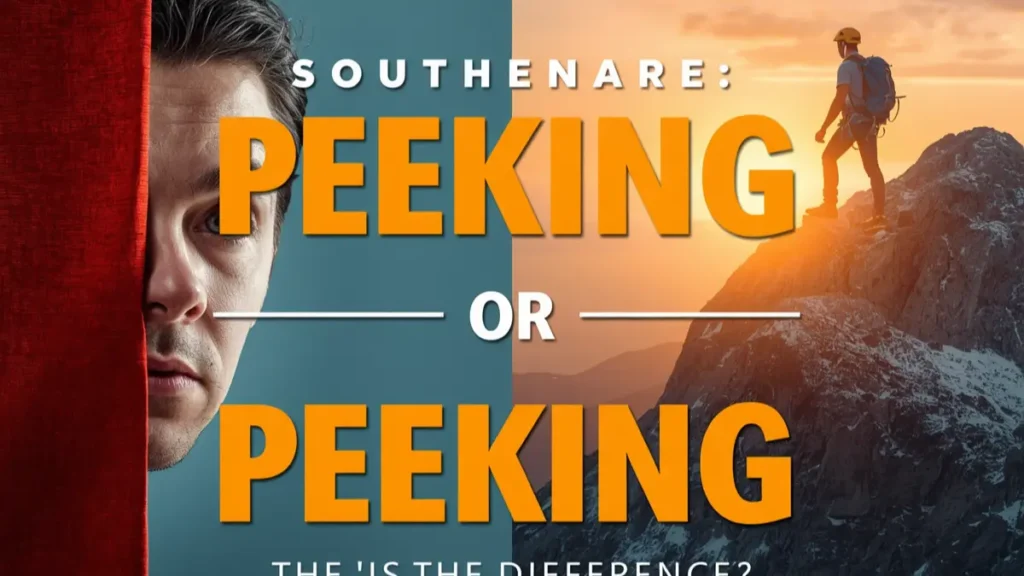
Many English learners and even native speakers confuse “peeking” and “peaking.” The words sound almost the same, but they have very different meanings. This makes them easy to mix up in writing, emails, social media posts, and school assignments.
People often search for “peeking or peaking” because spellcheck may not catch the mistake. Both words are correct spellings, but they fit different situations. Using the wrong one can change the meaning of your sentence completely.
For example, saying “sales are peeking this month” is incorrect if you mean sales reached the highest level. The correct word would be “peaking.” On the other hand, “She was peaking through the window” is wrong because the correct word is “peeking.”
This guide explains the difference in simple words. You will learn the meaning, origin, spelling differences, examples, common mistakes, and usage trends for both words. By the end, you will know exactly when to use peeking and when to use peaking.
Peeking or Peaking – Quick Answer
Peeking means taking a quick or secret look at something.
Peaking means reaching the highest point, level, or value.
Examples
- Peeking:
The child was peeking at the birthday gifts. - Peaking:
Website traffic is peaking this week.
Simple Trick to Remember
- Peek = Look
- Peak = Top
If it relates to seeing or looking secretly, use peeking.
If it relates to reaching the highest point, use peaking.
Stem or Steam: What’s the Difference?
The Origin of Peeking or Peaking
The word peek comes from old English dialect words meaning “to glance quickly” or “look secretly.” Over time, it became common in everyday English.
The word peak comes from the idea of a mountain peak, which is the highest point of a mountain. Later, people started using it to describe anything reaching its highest level.
The confusion happens because:
- Both words sound almost identical.
- Both end with “-ing.”
- English has many homophones with different meanings.
Word History Comparison
| Word | Original Meaning | Modern Meaning |
| Peek | Quick glance | Secret or fast look |
| Peak | Mountain top | Highest level or point |
British English vs American English Spelling
There is no major spelling difference between British English and American English for peeking and peaking. Both forms are spelled the same in both regions.
The difference is only in meaning, not regional spelling.
Posted inGrammar Knowledge
Site or Cite: What’s the Difference?
Comparison Table
| Context | Correct Word | Example |
| Looking secretly | Peeking | She was peeking behind the door. |
| Reaching the top | Peaking | Temperatures are peaking today. |
| Sneaking a look | Peeking | He kept peeking at his phone. |
| Highest performance | Peaking | The athlete is peaking before the tournament. |
UK vs US Usage
| Region | Preferred Spelling |
| United States | Peeking / Peaking |
| United Kingdom | Peeking / Peaking |
| Canada | Peeking / Peaking |
| Australia | Peeking / Peaking |
Which Spelling Should You Use?
The correct choice depends on the meaning you want.
Use “Peeking” When:
- Someone is secretly looking.
- Someone is taking a quick glance.
- The sentence involves eyes or seeing.
Examples
- Stop peeking at my answers.
- The cat was peeking through the curtains.
Use “Peaking” When:
- Something reaches the highest point.
- Growth, traffic, sales, or performance is increasing to the maximum level.
- You talk about success or intensity.
Examples
- Electricity demand is peaking this summer.
- Her career is peaking right now.
Audience-Based Advice
| Audience | Recommended Usage |
| US readers | Use standard meanings |
| UK readers | Use standard meanings |
| Global audience | Choose based on meaning only |
| Business writing | Use “peaking” for growth trends |
| Casual writing | Use “peeking” for looking secretly |
Common Mistakes with Peeking or Peaking
People often use these words incorrectly because they sound alike.
Common Errors and Fixes
| Incorrect Sentence | Correct Sentence |
| She was peaking through the window. | She was peeking through the window. |
| Sales are peeking this month. | Sales are peaking this month. |
| The child kept peaking at the gifts. | The child kept peeking at the gifts. |
| Interest rates are peeking again. | Interest rates are peaking again. |
Why These Mistakes Happen
- Pronunciation is very similar.
- Spellcheck may not detect the error.
- Writers confuse “peek” with “peak.”
Peeking or Peaking in Everyday Examples
In Emails
- I noticed people were peeking at the report before the meeting.
- Customer demand is peaking during the holiday season.
In News Headlines
- Tourism numbers are peaking this summer.
- Fans caught peeking behind the movie set fence.
On Social Media
- Stop peeking at my messages!
- My energy levels are peaking after coffee.
In Formal Writing
- The economy is peaking after steady growth.
- Participants were warned against peeking during the exam.
Peeking or Peaking – Google Trends & Usage Data
Search interest for “peeking or peaking” rises because many people confuse the two words while writing online.
Usage Trends
- Peeking is more common in casual conversation and storytelling.
- Peaking appears more in business, sports, science, and data reports.
Country-Based Popularity
| Country | More Common Search |
| United States | Peeking |
| United Kingdom | Peaking |
| Canada | Both similar |
| Australia | Both similar |
Context Comparison
| Word | Common Contexts |
| Peeking | Children, secrets, games, spying |
| Peaking | Business, sports, weather, performance |
Comparison Table: Peeking vs Peaking
| Feature | Peeking | Peaking |
| Root Word | Peek | Peak |
| Meaning | Quick or secret look | Highest point |
| Related To | Eyes or seeing | Growth or maximum level |
| Example | He was peeking. | Sales are peaking. |
| Part of Speech | Verb | Verb |
| Common Context | Casual situations | Business, sports, science |
FAQs About Peeking or Peaking
Is it peeking or peaking through the window?
The correct phrase is “peeking through the window” because it involves looking.
What does peaking mean?
Peaking means reaching the highest level or point.
What does peeking mean?
Peeking means taking a quick or secret look at something.
Why do people confuse peeking and peaking?
They sound alike but have different meanings.
Is peaking related to mountains?
Yes. The word comes from the idea of a mountain peak, meaning the highest point.
Can peeking and peaking both be correct?
Yes. Both are correct words, but they fit different situations.
Which word is used for business growth?
Use “peaking” when talking about growth, traffic, profits, or performance reaching the top level.
Conclusion
Understanding the difference between peeking and peaking is simple once you connect each word to its meaning. Peeking relates to looking quickly or secretly, while peaking relates to reaching the highest point or level. Even though the words sound almost identical, they are used in very different contexts.
A good memory trick is this: peek means look, peak means top. If your sentence involves eyes, watching, or sneaking a glance, choose peeking. If it involves growth, performance, numbers, or reaching a maximum level, choose peaking.
These words are commonly confused in emails, social media posts, news articles, and business writing. Learning the difference helps your writing look more professional and clear. Since both spellings are accepted in British and American English, you only need to focus on meaning.
Before using either word, pause and ask yourself one question: Am I talking about looking or reaching the top? The answer will guide you to the correct spelling every time.
Hi, I’m Henry William, the author of GrammarTribe.com. I’m passionate about the English language and have dedicated my career to helping people master grammar, spelling, and effective writing. Over the years, I’ve guided learners, writers, and professionals in understanding common mistakes, tricky rules, and nuances of English grammar in a simple and easy-to-follow way.
Through GrammarTribe.com, I aim to make grammar approachable and enjoyable for everyone. My work focuses on providing clear explanations, practical tips, and examples that readers can apply in everyday writing, whether it’s emails, essays, social media, or professional documents. I believe that strong grammar skills empower people to communicate confidently and professionally.
When I’m not writing or researching grammar, I enjoy reading, exploring language trends, and creating educational content that simplifies complex concepts. I’m committed to helping my audience write better, understand English deeply, and avoid common pitfalls, all while making learning grammar a fun and rewarding journey.