When it comes to family words, spelling mistakes are surprisingly common. Many people wonder whether it’s “niece” or “neice”, especially when writing cards, emails, or social media posts. This confusion arises because English doesn’t always spell words the way they sound. Misplacing vowels is a frequent error, and “niece” is one of those tricky words.
People search for this term to ensure their writing is correct and professional. Using the wrong spelling can make informal messages look careless or even affect formal writing, like in invitations or family announcements. This guide will clarify the correct spelling, explain why the mistake happens, and provide tips for remembering it. You’ll also learn about differences between British and American English, common mistakes, and real-world examples of usage.
Niece or Neice – Quick Answer
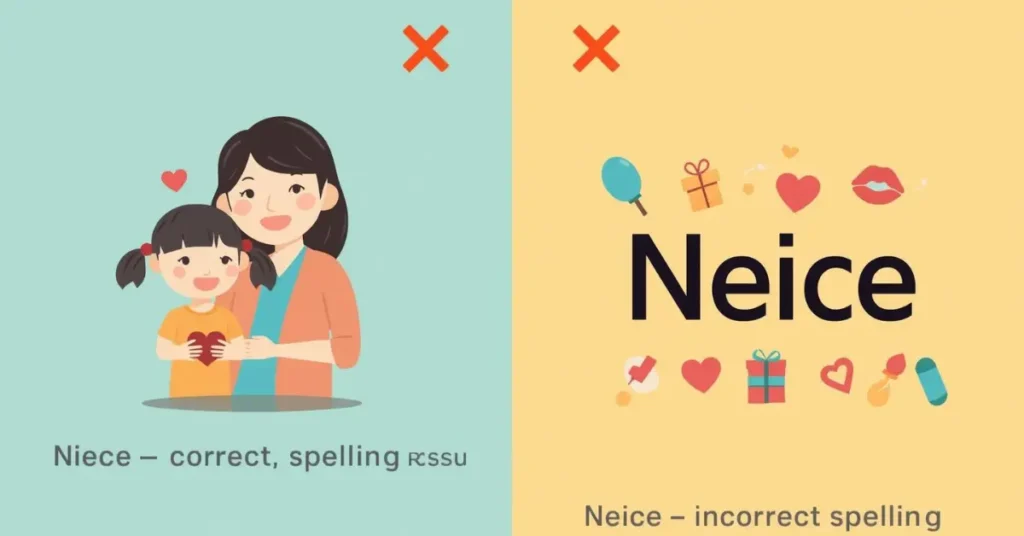
The correct spelling is “niece”.
- Example: My niece is coming to visit this weekend.
“Neice” is incorrect and should be avoided in all formal and informal writing.
The Origin of Niece
The word “niece” comes from the Old French word niece, which means “female relative” and ultimately from Latin neptia, meaning “granddaughter” or “female descendant.” Over time, English adopted the French spelling. The error “neice” likely comes from trying to spell the word phonetically, switching the “i” and “e.” Remembering the Latin root helps explain why “i before e” does not apply here—it’s an exception.
British English vs American English Spelling
The spelling “niece” is the same in both British and American English. There is no regional variation. English learners sometimes confuse it because it ends with “-ece,” which is uncommon in other words.
| Feature | British English | American English |
| Correct spelling | niece | niece |
| Common mistake | neice | neice |
| Pronunciation | /niːs/ | /niːs/ |
| Usage | All formal and informal writing | All formal and informal writing |
Which Spelling Should You Use?
Always use “niece” regardless of the region.
- US audience: Use niece in emails, invitations, and social media.
- UK/Commonwealth audience: Niece is correct in letters, academic writing, and formal announcements.
- Global: Stick to your niece to avoid confusion and maintain professionalism.
Common Mistakes with Niece
- Neice – ❌ Incorrect, even in casual writing.
- Nies – ❌ Misspelled or truncated form.
- Niecee – ❌ Doubling letters is unnecessary.
✅ Correct usage: I invited my niece to the birthday party.
Niece in Everyday Examples
Emails: Please let me know if your niece can attend the meeting.
Social Media: Had a fun day with my niece at the park!
News Articles: The celebrity shared a photo of her niece on Instagram.
Formal Writing: The will left a special inheritance for the niece of the deceased.
Niece – Google Trends & Usage Data
Search trends show that “niece” is far more commonly used than “neice” globally. People often search for it around family holidays like Mother’s Day, Christmas, and birthdays. Most searches come from English-speaking countries like the US, UK, Canada, and Australia.
| Keyword Variation | Global Search Popularity |
| niece | Very High |
| neice | Low / Error Searches |
FAQs About Niece
- Is it niece or neice?
Always niece. “Neice” is incorrect. - How do you pronounce niece?
It’s pronounced /niːs/. - Does niece mean the daughter of my sibling?
Yes, your niece is your brother’s or sister’s daughter. - Can “niece” be used in formal writing?
Yes, it is fully correct in formal and informal contexts. - Why do people spell it neice?
They try to spell it phonetically and swap letters mistakenly. - Are there any regional differences?
No, spelling is the same worldwide. - How to remember the correct spelling?
Remember: N-I-E-C-E, like “I before E after N,” but it’s an exception.
Conclusion
The word “niece” is often misspelled as “neice,” but the correct form is always niece. Its origin from Old French and Latin explains its unique spelling, which doesn’t follow typical English “i before e” rules. Both British and American English use the same form, making it simple to standardize your writing globally.
Always double-check family-related words to avoid small errors that may affect clarity or professionalism. Whether you are writing emails, social media posts, or formal announcements, using niece correctly shows attention to detail and proper grammar.
Remembering its origin, correct spelling, and common pitfalls will ensure your writing is always polished and accurate.

Hi, I’m Henry William, the author of GrammarTribe.com. I’m passionate about the English language and have dedicated my career to helping people master grammar, spelling, and effective writing. Over the years, I’ve guided learners, writers, and professionals in understanding common mistakes, tricky rules, and nuances of English grammar in a simple and easy-to-follow way.
Through GrammarTribe.com, I aim to make grammar approachable and enjoyable for everyone. My work focuses on providing clear explanations, practical tips, and examples that readers can apply in everyday writing, whether it’s emails, essays, social media, or professional documents. I believe that strong grammar skills empower people to communicate confidently and professionally.
When I’m not writing or researching grammar, I enjoy reading, exploring language trends, and creating educational content that simplifies complex concepts. I’m committed to helping my audience write better, understand English deeply, and avoid common pitfalls, all while making learning grammar a fun and rewarding journey.