Many women experience bleeding and wonder whether it’s a miscarriage or period. This confusion is common because early pregnancy loss can mimic period-like symptoms. Women often search this phrase online to understand their bodies, avoid unnecessary panic, and know when to seek medical attention.
Distinguishing between a normal menstrual cycle and a miscarriage is crucial for physical and emotional well-being.Bleeding during early pregnancy may be mistaken for a period, but other symptoms like cramping, clotting, and timing can signal a miscarriage.
Understanding the differences can help women respond appropriately and consult healthcare providers when needed. This article explains the distinction in simple terms, offers examples, and provides professional guidance to make this confusing topic clearer.
Miscarriage or Period – Quick Answer
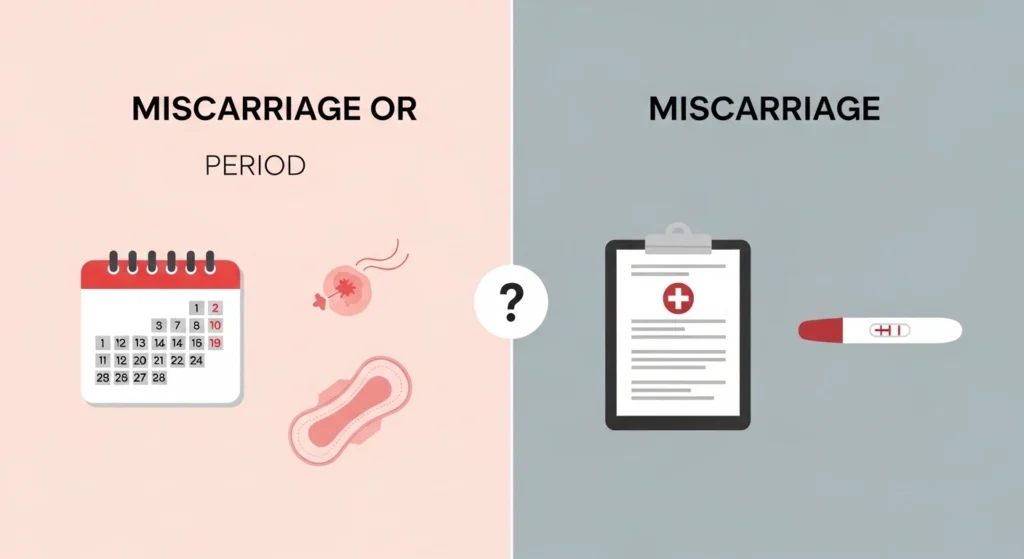
A period is the monthly shedding of the uterine lining in a non-pregnant woman. It usually lasts 3–7 days and follows a predictable cycle.
A miscarriage, on the other hand, is the loss of a pregnancy before 20 weeks. Early miscarriage can cause bleeding similar to a period but is often accompanied by:
- Severe cramps
- Passage of tissue
- Unexpected timing outside the usual cycle
Example:
- Bleeding on day 28 of your cycle → likely period.
- Bleeding at 6 weeks of pregnancy with clots → possible miscarriage; consult a doctor.
The Origin of “Miscarriage or Period”
The term “miscarriage” comes from the 15th-century English words “mis-” (wrong) + “carriage” (to carry), meaning an unsuccessful carrying of pregnancy.
The word “period” comes from Greek periodos, meaning “cycle” or “revolving time,” and has been used in English since the 14th century to describe menstruation.
While spelling differences do not exist for these specific terms, understanding their history helps clarify why they describe very different biological events.
British English vs American English Spelling
Both miscarriage and period are spelled the same in British and American English. However, general medical terms sometimes differ between US and UK usage.
| Term | British English | American English | Notes |
| Miscarriage | miscarriage | miscarriage | Same spelling |
| Period | period | period | Same spelling |
| Gynecology | gynaecology | gynecology | US simplifies ‘ae’ to ‘e’ |
While the key terms remain identical, related medical language may vary by region.
Which Spelling Should You Use?
Since miscarriage and period are universally spelled the same, focus on audience clarity:
- US readers: Use standard terms and include simple explanations.
- UK/Commonwealth readers: Same spelling works; may add local healthcare references.
- Global audience: Keep wording clear, avoid jargon, and explain context.
Common Mistakes with “Miscarriage or Period”
Many people confuse:
- Spotting in early pregnancy → not always a miscarriage.
- Heavy periods vs miscarriage bleeding → check for clotting, pain, and timing.
- Self-diagnosing → always consult a doctor if unsure.
Correction tip: Track cycles and pregnancy tests for accurate understanding.
“Miscarriage or Period” in Everyday Examples
Emails:
“I’m concerned about bleeding—could this be a miscarriage or period?”
News:
“Early pregnancy bleeding can confuse women whether it’s a miscarriage or period.”
Social media:
“Help! Is this miscarriage or period? Anyone experienced this?”
Formal writing:
“Differentiating miscarriage from menstrual bleeding is crucial in obstetrics.”
“Miscarriage or Period” – Google Trends & Usage Data
Search interest peaks around:
- Early pregnancy discussions
- Health awareness campaigns
- Women’s forums and pregnancy groups
Top countries searching: US, UK, Canada, Australia, India.
Insight: People want quick guidance, reassurance, and clear medical advice online.
Keyword Variations Comparison Table
| Keyword Variation | Meaning/Use |
| Miscarriage vs period | Distinguishing pregnancy loss from menstruation |
| Spotting or period | Light bleeding clarification |
| Early pregnancy bleeding | Explains medical symptoms |
| Period-like miscarriage | Common phrase in forums |
| Menstrual bleeding or miscarriage | Used in professional guidance |
FAQs
1. Can miscarriage feel like a period?
Yes, early miscarriage often causes bleeding and cramps similar to a period.
2. How long does miscarriage bleeding last?
Typically 1–2 weeks, sometimes longer, depending on the individual.
3. Can I have a period while pregnant?
True menstruation does not occur during pregnancy, but light spotting is possible.
4. What signs indicate miscarriage?
Heavy bleeding, severe cramps, passing tissue, and sudden loss of pregnancy symptoms.
5. Should I see a doctor?
Always consult a healthcare provider if bleeding occurs during early pregnancy.
6. Can miscarriage happen without bleeding?
Yes, some early miscarriages are “silent” and discovered via ultrasound.
7. How to differentiate period vs miscarriage at home?
Track timing, flow, clotting, and pregnancy tests, but medical confirmation is best.
Conclusion
Understanding the difference between a miscarriage and period is essential for women’s health. While periods are a natural monthly occurrence, miscarriages represent early pregnancy loss and require careful attention. Monitoring symptoms, tracking cycles, and consulting healthcare providers ensures accurate recognition and timely care.
For writing, reporting, or online discussion, using these terms clearly prevents confusion and provides support for women seeking guidance.If addressing a US, UK, or global audience, the terms remain the same, but context matters. Awareness and clarity can help reduce stress, improve health outcomes, and foster better understanding of women’s reproductive health.

Hi, I’m Henry William, the author of GrammarTribe.com. I’m passionate about the English language and have dedicated my career to helping people master grammar, spelling, and effective writing. Over the years, I’ve guided learners, writers, and professionals in understanding common mistakes, tricky rules, and nuances of English grammar in a simple and easy-to-follow way.
Through GrammarTribe.com, I aim to make grammar approachable and enjoyable for everyone. My work focuses on providing clear explanations, practical tips, and examples that readers can apply in everyday writing, whether it’s emails, essays, social media, or professional documents. I believe that strong grammar skills empower people to communicate confidently and professionally.
When I’m not writing or researching grammar, I enjoy reading, exploring language trends, and creating educational content that simplifies complex concepts. I’m committed to helping my audience write better, understand English deeply, and avoid common pitfalls, all while making learning grammar a fun and rewarding journey.