Many people search for “lieing or lying” because both spellings look possible. When you are writing an email, a blog post, an exam answer, or a social media caption, you want to be correct.
One small spelling mistake can change how professional your writing looks. This confusion usually comes from English spelling rules that are not obvious to learners or even native speakers.
The verb “lie” has more than one meaning. It can mean to tell something untrue, or it can mean to rest or recline. When we change verbs by adding -ing, English sometimes drops letters, and sometimes it does not. This is where the confusion starts. People think “lie + ing” should become lieing, but English does not work that way here.
This article clearly explains the difference between lieing and lying. You will get a quick answer, simple examples, history, British vs American rules, common mistakes, and real-life usage. By the end, you will know which spelling to use every time, with confidence.
Lieing or Lying – Quick Answer
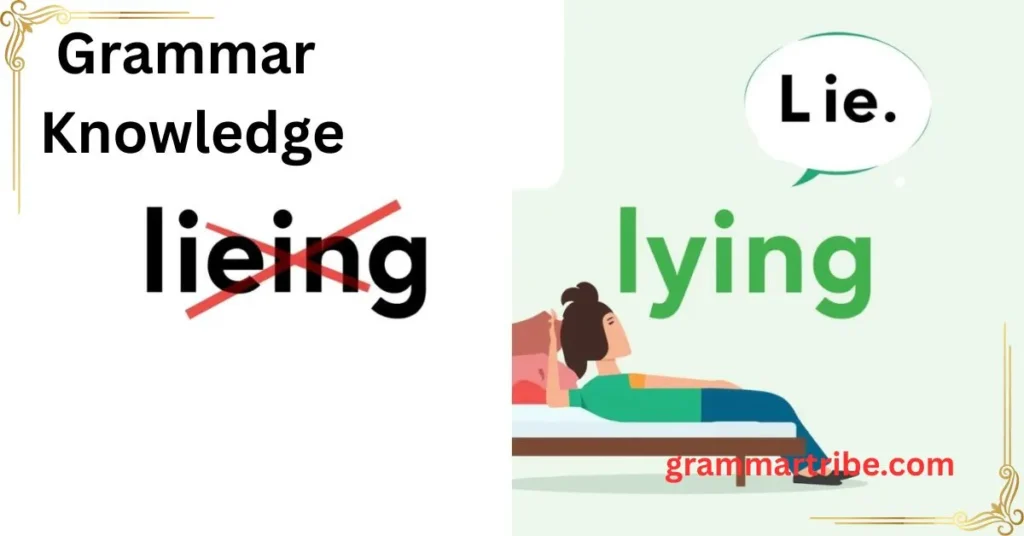
Correct spelling: lying
Incorrect spelling: lieing
Examples:
- ✅ He is lying on the bed.
- ✅ She was lying about her age.
- ❌ He is lieing on the bed. (wrong)
There is no correct use of “lieing” in modern English.
Raed more: Accidently Or Accidentally: Spelling, Usage, and new Tips
The Origin of Lieing or Lying
The word “lie” comes from Old English licgan, meaning “to rest” or “to recline.” Over time, English simplified the word to “lie.” When English adds -ing to verbs that end in -ie, the rule is simple:
Change “ie” to “y” and add “ing.”
So:
- lie → lying
- die → dying
- tie → tying
The spelling “lieing” breaks this rule. That is why it has never been accepted as correct English.
Read more: Wierd or Weird: Which Spelling Is Correct,Guide with Examples
British English vs American English Spelling
There is no difference between British and American English for this word.
| Form | British English | American English |
| lying | ✅ Correct | ✅ Correct |
| lieing | ❌ Wrong | ❌ Wrong |
Both follow the same spelling rule.
Which Spelling Should You Use?
Always use lying, no matter your audience.
- US audience: lying
- UK audience: lying
- Commonwealth countries: lying
- Global or ESL audience: lying
Using “lieing” can make your writing look unprofessional or incorrect.
Common Mistakes with Lieing or Lying
Here are frequent errors people make:
- ❌ He was lieing to his boss.
✅ He was lying to his boss. - ❌ She is lieing down now.
✅ She is lying down now. - ❌ Lieing is bad behavior.
✅ Lying is bad behavior.
Lieing or Lying in Everyday Examples
Emails:
- I apologize for lying about the deadline.
News:
- The witness was accused of lying in court.
Social Media:
- Stop lying for attention.
Formal Writing:
- The report proves the data was not lying unused.
Lieing or Lying – Google Trends & Usage Data
Search data shows that “lying” is widely used in all English-speaking countries. The term “lieing” appears mainly in searches because people are unsure about spelling. Most users search “lieing or lying” to confirm the correct form. Schools, grammar sites, and editors always recommend lying as the only correct option.
Comparison Table: Lieing vs Lying
| Word | Correct? | Meaning | Usage |
| lying | ✅ Yes | resting or telling a lie | All English |
| lieing | ❌ No | none | Never use |
FAQs
1. Is “lieing” ever correct?
No. It is always wrong.
2. Why do people write “lieing”?
Because they do not know the “ie → y” rule.
3. Does “lying” mean only telling lies?
No. It also means resting or reclining.
4. Is this rule the same in British English?
Yes. The spelling is the same everywhere.
5. What about “lying down”?
That is also correct.
6. Is “lying” a verb or adjective?
It can be both, depending on the sentence.
Conclusion
The confusion between lieing or lying is very common, but the rule is simple once you know it. “Lying” is the only correct spelling, and “lieing” is always wrong. This rule applies in American English, British English, and all other forms of modern English. The mistake happens because English changes “ie” to “y” before adding –ing, just like in “dying” and “tying.”
Whether you are writing an email, an article, a school assignment, or a social media post, using the correct spelling matters. It improves clarity, builds trust, and makes your writing look professional. If you remember only one thing, remember this: never write “lieing.” Always write “lying.”
With this guide, you can now use the word correctly every time, without second guessing.

Hi, I’m Henry William, the author of GrammarTribe.com. I’m passionate about the English language and have dedicated my career to helping people master grammar, spelling, and effective writing. Over the years, I’ve guided learners, writers, and professionals in understanding common mistakes, tricky rules, and nuances of English grammar in a simple and easy-to-follow way.
Through GrammarTribe.com, I aim to make grammar approachable and enjoyable for everyone. My work focuses on providing clear explanations, practical tips, and examples that readers can apply in everyday writing, whether it’s emails, essays, social media, or professional documents. I believe that strong grammar skills empower people to communicate confidently and professionally.
When I’m not writing or researching grammar, I enjoy reading, exploring language trends, and creating educational content that simplifies complex concepts. I’m committed to helping my audience write better, understand English deeply, and avoid common pitfalls, all while making learning grammar a fun and rewarding journey.