
Have you ever typed a sentence and stopped at the word flavor or flavour? You’re not alone. This is a very common spelling question in English, especially for students, bloggers, food writers, and SEO professionals.
Both spellings look right. Both appear in recipes, articles, and ads. So why does English have two versions of the same word?The confusion exists because English is used globally, but spelling rules change by region.
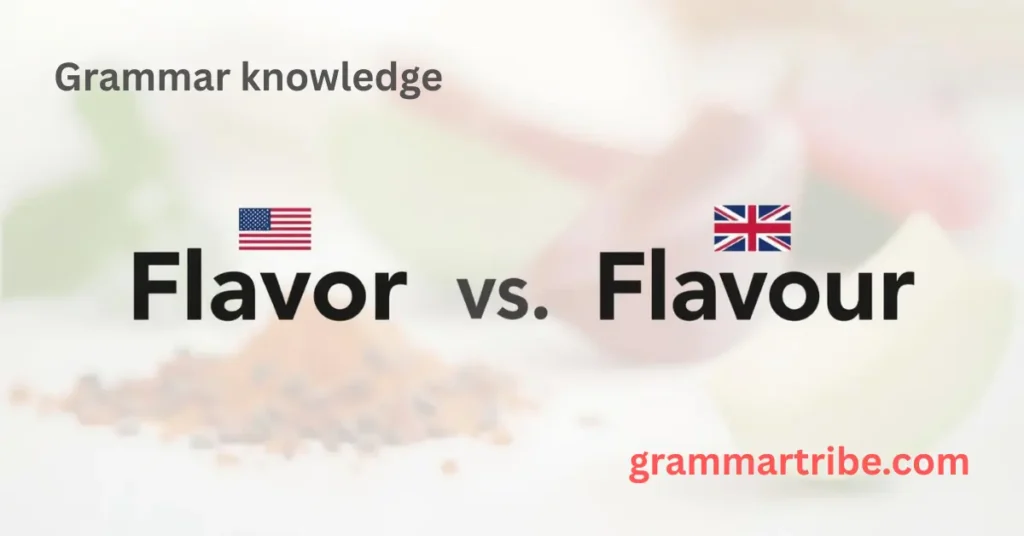
Flavor and flavour mean the same thing: the taste of food or a distinct quality of something. The difference is not about meaning, it’s about American vs British English.
People search for flavor or flavour to avoid mistakes, improve writing quality, and match their audience’s expectations. Using the wrong spelling can look careless, especially in professional or SEO-focused content.
This article clears all confusion with a quick answer, clear rules, examples, tables, and practical advice. By the end, you’ll know exactly which spelling to use and when.
Flavor or Flavour – Quick Answer
Both spellings are correct.
- Flavor → American English
- Flavour → British English
Examples:
- US: This ice cream has a rich chocolate flavor.
- UK: This soup has a spicy flavour.
The meaning is exactly the same.
The Origin of Flavor / Flavour
The word comes from the Old French word “flaveur”, meaning taste or smell. It entered English through French and Latin influences.
In early English, spelling was not fixed. Over time:
- British English kept the French-style -our ending (flavour).
- American English, led by spelling reformer Noah Webster, simplified words to -or (flavor).
This is why we see similar pairs:
- colour / color
- honour / honor
- favour / favor
British English vs American English Spelling
Spelling Rule
- British English → -our
- American English → -or
Examples:
- British: The dish has a strong garlic flavour.
- American: The drink has a sweet flavor.
Comparison Table
| Feature | Flavor | Flavour |
| English Type | American | British |
| Used In | USA | UK, Pakistan, India, Australia |
| Meaning | Taste or quality | Taste or quality |
| SEO (US) | ✅ Best choice | ❌ Less common |
| SEO (UK) | ❌ Less common | ✅ Best choice |
Which Spelling Should You Use?
Use the spelling that matches your audience:
- United States → Flavor
- United Kingdom → Flavour
- Pakistan / India / Australia → Flavour
- Global or tech audience → Flavor (more common online)
👉 The most important rule: stay consistent throughout your content.
Common Mistakes with Flavor / Flavour
❌ Mixing both spellings in one article
✔️ Use only one spelling
❌ Thinking one spelling is wrong
✔️ Both are correct
❌ Using UK spelling for US SEO
✔️ Match spelling to audience
❌ Misspellings like flaver or flavur
✔️ Use correct standard spelling
Flavor / Flavour in Everyday Examples
Emails
- This product has a mild flavor.
- The sauce has a unique flavour.
News
- New flavors launched this summer.
- Traditional flavours remain popular.
Social Media
- I love this new coffee flavor!
- This dessert has amazing flavour.
Formal Writing
- Flavor perception affects food choice.
- Flavour development is key in cooking.
Flavor or Flavour – Google Trends & Usage Data
- Flavor dominates searches in the United States
- Flavour is more popular in the UK and Commonwealth countries
- Globally, flavor appears slightly more due to American media and SEO
Search engines understand both, but regional relevance improves rankings.
Keyword Comparison Table
| Variation | Correct | Notes |
| flavor | ✅ | American English |
| flavour | ✅ | British English |
| flaver | ❌ | Incorrect |
| flavur | ❌ | Incorrect |
FAQs – Flavor or Flavour
1. Is the flavor American or British?
American English.
2. Is flavour incorrect?
No, it’s British English.
3. Do flavor and flavour mean the same thing?
Yes, the meaning is identical.
4. Which spelling is better for SEO?
Use the spelling your audience searches for.
5. Can I use both in one article?
No, stay consistent.
6. Which spelling should students use?
Follow your school’s English standard.
7. Is flavor more common online?
Yes, due to US-based content.
Conclusion:
The difference between flavor or flavour is simple once you know the rule. Both spellings are correct and share the same meaning. The only difference is regional usage. American English uses flavor, while British English and many Commonwealth countries use flavour.
For clear and professional writing, always match your spelling to your audience. If you write for a US audience or focus on SEO and tech content, flavor is usually the best choice. If your readers are in the UK, Pakistan, or Australia, flavour feels more natural and correct.
Consistency is key. Switching between spellings can confuse readers and reduce trust. Once you choose one version, use it everywhere in your content.
Remember this simple rule:
US = flavor | UK/Commonwealth = flavour
With this knowledge, you can write confidently and correctly every time.

I am James Wilson, an author at GrammarTribe.com, specializing in English grammar and clear communication.
I create expert, reliable content to help learners write with confidence and accuracy.