The confusion between fair or fare is one of the most common spelling and meaning mistakes in English. Many learners search for “fair or fare” because these two words look almost identical but have completely different meanings. One small spelling change can turn a sentence about justice into something related to travel tickets or food prices. That is why understanding fair or fare is important for students, writers, and professionals.
People often type “fair or fare” when writing emails, essays, social media posts, or even business documents and feel unsure which word is correct. For example, should you say “fair price” or “fare price”? Or “bus fair” or “bus fare”? This confusion leads to errors in communication and sometimes changes the entire meaning of a sentence.
In simple terms, fair is usually about equality, events, or beauty, while fare is related to transport costs or food and performance. Learning the difference between fair or fare helps you write correctly, avoid mistakes, and improve your English clarity. This guide will clearly explain both words with examples, rules, and easy tips so you never confuse them again.
Fair or Fare – Quick Answer
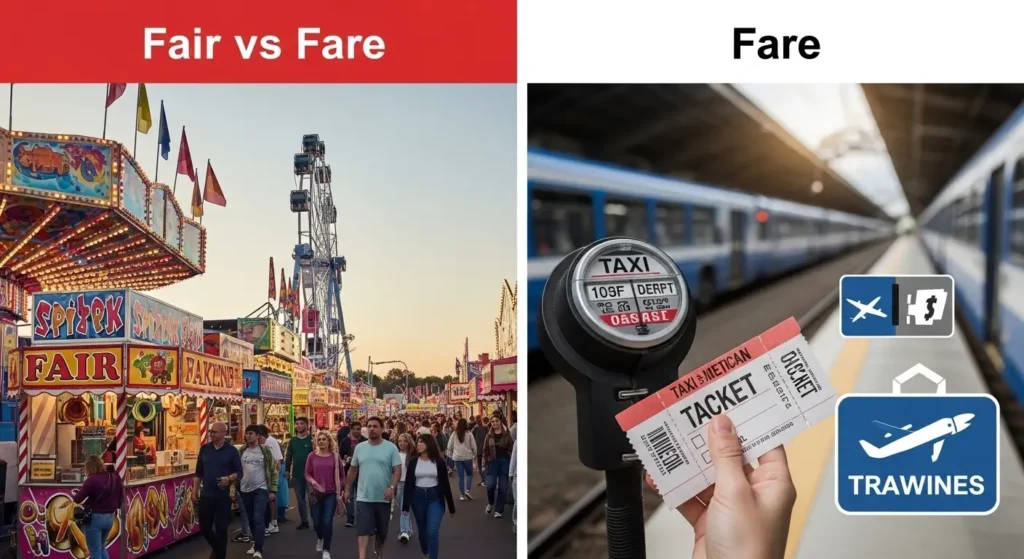
Fair means equal, just, or an event (like a festival).
Fare means the price paid for travel or food.
Examples:
- The system is not fair to everyone.
- The bus fare is very cheap.
- She went to the book fair.
- He paid the taxi fare.
The Origin of Fair or Fare
The word fair comes from Old English fæger, meaning beautiful or pleasing. Over time, it expanded to mean just, equal, and even public events like trade fairs.
The word fare comes from Old English faran, meaning to travel or go. Later, it became connected to travel cost, food, and journey-related expenses.
These different origins explain why fair or fare sound similar but have completely different meanings today.
British English vs American English Spelling
The confusion in fair or fare is not about UK vs US spelling, because both English types use the same spellings. The difference is only in usage context, not spelling rules.
| Word | Meaning | UK Usage | US Usage |
| Fair | Justice / Event | Common | Common |
| Fare | Travel cost / food | Common | Common |
Both regions use fair and fare in the same way.
Which Spelling Should You Use?
- US English: Use fair for justice/events and fare for transport or food costs.
- UK/Commonwealth English: Same rule applies.
- Global English users: Follow meaning, not region.
👉 Tip: If it involves “price or travel,” use fare. If it involves “justice, event, or beauty,” use fair.
Common Mistakes with Fair or Fare
- ❌ Bus fair → ✔ Bus fare
- ❌ Food fair → ✔ Food fare (rare but correct in context of pricing)
- ❌ It’s not fare → ✔ It’s not fair
- ❌ Taxi fair → ✔ Taxi fare
People confuse them because they sound the same when spoken.
Fair or Fare in Everyday Examples
Emails:
- “Please confirm the bus fare before booking.”
News:
- “The trade fair attracted thousands of visitors.”
Social Media:
- “Life is not always fair, but we adjust.”
Formal Writing:
- “The airline increased its ticket fare this year.”
Fair or Fare – Google Trends & Usage Data
Search data shows:
- “fair” is searched more globally because it has multiple meanings (justice, events, beauty).
- “fare” is commonly searched in travel-related queries (bus fare, taxi fare, flight fare).
- Most confusion comes from India, Pakistan, and ESL learners worldwide.
Overall, “fair or fare” is a high-volume grammar confusion keyword in English learning platforms.
Comparison Table: Fair vs Fare
| Feature | Fair | Fare |
| Meaning | Just / Event / Beautiful | Travel or food cost |
| Usage | Equality, festivals | Transport, pricing |
| Example | Fair judgment | Bus fare |
| Word Type | Adjective / noun | Noun / verb |
| Common Mistake | Used instead of fare | Used instead of fair |
FAQs – Fair or Fare
1. What is the main difference between fair and fare?
Fair means just or an event; fare means travel cost.
2. Is the bus fair correct?
No, correct form is bus fare.
3. Can fair mean price?
Yes, but only in context like “fair price” meaning reasonable price.
4. Why do people confuse fair and fare?
Because they sound the same when spoken.
5. Is fare used only for transport?
Mostly yes, but also for food or entertainment cost.
6. Is fair a noun or adjective?
It can be both.
7. Which is more commonly used?
Fair is more common due to multiple meanings.
Conclusion
Understanding the difference between fair or fair is essential for clear and correct English writing. Although both words sound the same, their meanings are completely different. Fair is used to describe justice, equality, beauty, or public events like trade fairs.
On the other hand, fare refers to the cost of travel, food, or services. This small spelling difference can completely change the meaning of a sentence, which is why learners often get confused.
By learning simple rules and examples, you can easily avoid mistakes such as writing “bus fair” instead of “bus fare.” Whether you are writing emails, academic essays, or social media posts, using the correct form improves your communication and makes your English more professional. Remember: if it involves fairness or events, use fair; if it involves money or travel, use fare.
Mastering fair or fare not only improves grammar accuracy but also builds confidence in everyday English usage. With practice, you will never confuse these two words again.

I am James Wilson, an author at GrammarTribe.com, specializing in English grammar and clear communication.
I create expert, reliable content to help learners write with confidence and accuracy.