Confused about whether to say “drank” or “drunk”? You are not alone. Many English learners, and even native speakers, often mix these two forms of the verb drink. Using the wrong one can make sentences sound awkward or incorrect.
Understanding the difference is simple once you know the rule: “drank” is the past tense, and “drunk” is the past participle. This article clears all confusion, giving clear examples, historical context, and usage tips. By the end, you will confidently choose the right form for emails, social media, essays, and everyday conversation.
Drank or Drunk – Quick Answer
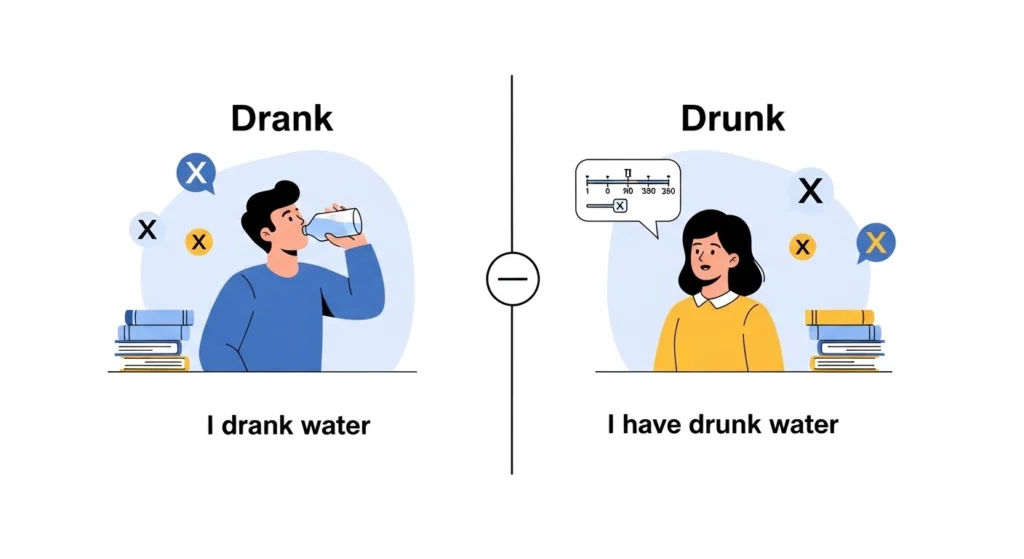
- Drank → Simple past tense of drink.
- Example: I drank water after my workout.
- Drunk → Past participle, used with have/has/had.
- Example: She has drunk all the juice.
Quick Tip: If you use have, has, or had, choose drunk. Otherwise, use drank.
The Origin of Drank or Drunk
The words drank and drunk come from Old English drincan, meaning to drink. Over centuries, English developed distinct forms for past tense (drank) and past participle (drunk) to clarify actions in different contexts. The difference is grammatical, not regional, but it helps avoid confusion between completed actions and actions linked to other verbs like have.
British English vs American English Spelling
Both drank and drunk are spelled the same in British and American English. However, usage style can differ slightly in formal writing.
| Form | British English Usage | American English Usage |
| Drank | Common in past tense | Common in past tense |
| Drunk | Past participle with have | Past participle with have |
Note: Both variants follow the same grammar rules. Differences appear more in style than in spelling.
Which Spelling Should You Use?
- US Audience: Follow standard rules: drank for past tense, drunk with have/has/had.
- UK/Commonwealth: Same rules apply. Formal British English prefers correct past participle usage in professional writing.
- Global Context: For clarity, always stick to grammatical correctness to avoid confusion.
Common Mistakes with Drank or Drunk
- ❌ I have drank all the coffee. → ✅ I have drunk all the coffee.
- ❌ He drunk two cups of tea yesterday. → ✅ He drank two cups of tea yesterday.
- ❌ She drank all the wine already. → ✅ She has drunk all the wine already.
Tip: Use “have/has/had” + drunk; use drank alone for past actions.
Drank or Drunk in Everyday Examples
- Emails: “I have drunk the sample; it tastes perfect.”
- News Headlines: “Local Man drank five liters of water in one hour.”
- Social Media: “We drank too much coffee at the cafe today!”
- Formal Writing: “The patient has drunk the prescribed medicine.”
Drank or Drunk – Google Trends & Usage Data
Google search trends show spikes for “drank vs drunk” in English-speaking countries, especially in the US, UK, Canada, and Australia. Users often search this keyword to avoid embarrassing grammar mistakes in writing or social posts.
Comparison Table: Drank vs Drunk
| Word | Type | Correct Use Example |
| Drank | Past tense | I drank lemonade yesterday. |
| Drunk | Past participle | I have drunk lemonade every day. |
FAQs
1. Can I say “have drank”?
No. Correct form: “have drunk.”
2. Is “drank” ever incorrect?
No, only if used as a past participle with have/has/had.
3. Can “drunk” stand alone?
No. It usually comes after have/has/had.
4. Are there differences in American and British English?
Minimal. Both use the same rules for past tense and participle.
5. Which is more common in daily conversation?
“Drank” is more common because most people refer to past actions without auxiliary verbs.
6. Can “drunk” describe a state?
Yes, “drunk” can also describe being intoxicated. Example: He was drunk last night.
7. How do I remember the difference?
Think: drank = past, drunk = with have/has/had.
Conclusion
Understanding drank vs drunk is simple once you know the grammar rule: drank is past tense, drunk is past participle. Using the wrong form can confuse readers and make your writing look unprofessional. Remember the quick tip: if there’s have, has, or had, use drunk.
Otherwise, drank is correct. British and American English follow the same rules, so you can confidently use these forms globally. Practice with real examples in emails, social media, and formal writing to master the distinction. Clear usage improves your credibility, and you will no longer hesitate when choosing between drank and drunk.

Hi, I’m Henry James, the author behind GrammarTribe.com. I’m passionate about the English language and specialize in grammar, helping readers understand complex rules in a simple, clear way. Over the years, I’ve dedicated myself to creating content that makes learning grammar practical, fun, and accessible for everyone. If you’re a student, professional, or language enthusiast.
Through GrammarTribe.com, I share tips, guides, and examples to help people write confidently and correctly. My goal is to make grammar less intimidating and more useful in everyday writing, emails, social media, and professional communication. Writing and teaching grammar isn’t just my profession — it’s my passion.
When I’m not writing, I enjoy reading, exploring language trends, and discovering new ways to make English learning engaging and easy. My mission is to empower readers to communicate clearly and confidently, one grammar tip at a time.