Many English learners and writers feel confused when they see authorized and authorised used in different places. Both spellings look correct, both appear in professional writing, and both mean the same thing. So why do two spellings exist?
People search for “authorized or authorised” to know which spelling they should use in emails, documents, blogs, exams, and official writing. Using the wrong spelling is not a grammar mistake, but it can look unprofessional if it doesn’t match your audience.
This guide explains the difference, correct usage, examples, and spelling rules in a simple way. By the end, you will know exactly which spelling to use and when.
Authorized or Authorised – Quick Answer
Both spellings are correct.
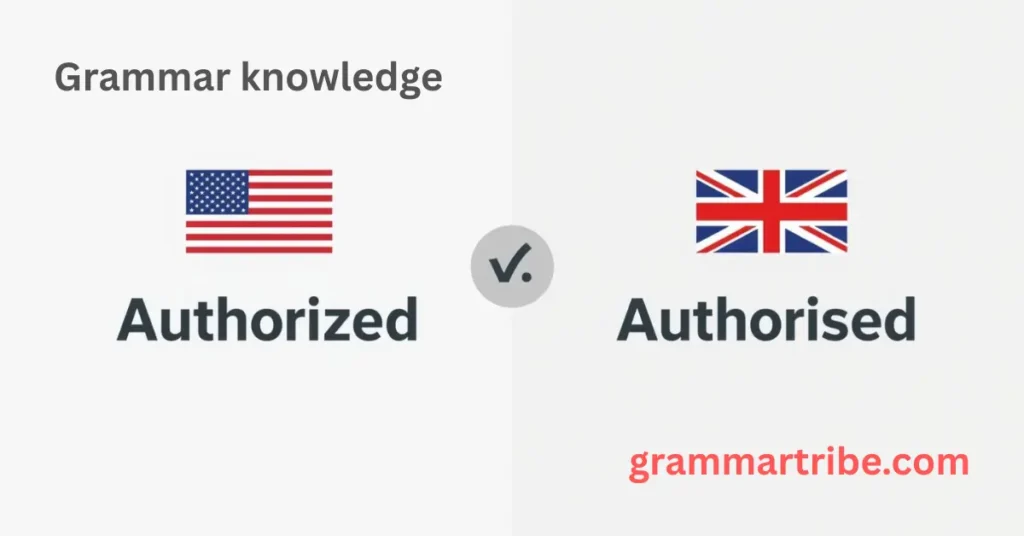
- Authorized → American English
- Authorised → British English
Examples:
- US: Only authorized users can access this page.
- UK: She is authorised to sign the documents.
The meaning is the same in both cases.
The Origin of Authorized or Authorised
The word comes from the Latin “auctor”, meaning one who gives authority. It passed into French and then into English.
In early English, spelling was not fixed. Later:
- British English preferred -ise endings (authorised)
- American English, led by Noah Webster, favored -ize for simplicity (authorized)
This pattern appears in many words:
- organise / organize
- recognise / recognize
- authorise / authorize
British English vs American English Spelling
Main Rule
- American English → -ize (authorized)
- British English → -ise (authorised)
Examples
- American: The manager authorized the payment.
- British: The manager authorised the payment.
Comparison Table
| Aspect | Authorized | Authorised |
| English Type | American | British |
| Common Regions | USA | UK, Pakistan, Australia |
| Meaning | Given permission | Given permission |
| SEO (US) | ✅ Best choice | ❌ Not ideal |
| SEO (UK) | ❌ Not ideal | ✅ Best choice |
Which Spelling Should You Use?
Use the spelling that matches your audience:
- US audience / US SEO → Authorized
- UK audience → Authorised
- Pakistan, India, Australia → Authorised
- Global or tech audience → Authorized (more widely searched)
Pick one spelling and stay consistent.
Common Mistakes with Authorized or Authorised
❌ Mixing both spellings in one article
✔️ Use only one version
❌ Thinking one spelling is wrong
✔️ Both are correct
❌ Using UK spelling for US clients
✔️ Match spelling to audience
❌ Switching spellings for SEO keywords
✔️ Optimize for one main keyword
Authorized or Authorised in Everyday Examples
Emails
- You are authorized to access the system.
- You are authorised to access the system.
News
- The court authorized the investigation.
- The court authorised the investigation.
Social Media
- This account is not authorized.
- This account is not authorised.
Formal Writing
- Only authorized personnel may enter.
- Only authorised personnel may enter.
Authorized or Authorised – Google Trends & Usage Data
- Authorized is most popular in the United States
- Authorised dominates in the UK and Commonwealth countries
- Globally, authorized is slightly more common due to US-based technology, apps, and SEO content
Search engines accept both spellings, but matching user location improves relevance.
Keyword Comparison Table
| Variation | Correct | Region |
| authorized | ✅ | American English |
| authorised | ✅ | British English |
| authorizd | ❌ | Incorrect |
| authorisd | ❌ | Incorrect |
FAQs – Authorized or Authorised
1. Is American English authorized?
Yes.
2. Is British English authorised?
Yes.
3. Are both spellings correct?
Yes, both are correct.
4. Which spelling is better for SEO?
Use the one your audience searches for.
5. Can I use both in one document?
No, stay consistent.
6. Which spelling is used in Pakistan?
Authorised (British English).
7. Do they mean the same thing?
Yes, the meaning is identical.
Conclusion :
The difference between authorized or authorised is not about meaning it’s about region. American English prefers authorized, while British English prefers authorised. Both are grammatically correct and professional when used properly.
To avoid confusion, always think about who will read your content. Match your spelling to your audience, and stay consistent throughout your writing. This small detail improves clarity, professionalism, and trust in your content.

Hi, I’m Henry William, the author of GrammarTribe.com. I’m passionate about the English language and have dedicated my career to helping people master grammar, spelling, and effective writing. Over the years, I’ve guided learners, writers, and professionals in understanding common mistakes, tricky rules, and nuances of English grammar in a simple and easy-to-follow way.
Through GrammarTribe.com, I aim to make grammar approachable and enjoyable for everyone. My work focuses on providing clear explanations, practical tips, and examples that readers can apply in everyday writing, whether it’s emails, essays, social media, or professional documents. I believe that strong grammar skills empower people to communicate confidently and professionally.
When I’m not writing or researching grammar, I enjoy reading, exploring language trends, and creating educational content that simplifies complex concepts. I’m committed to helping my audience write better, understand English deeply, and avoid common pitfalls, all while making learning grammar a fun and rewarding journey.