
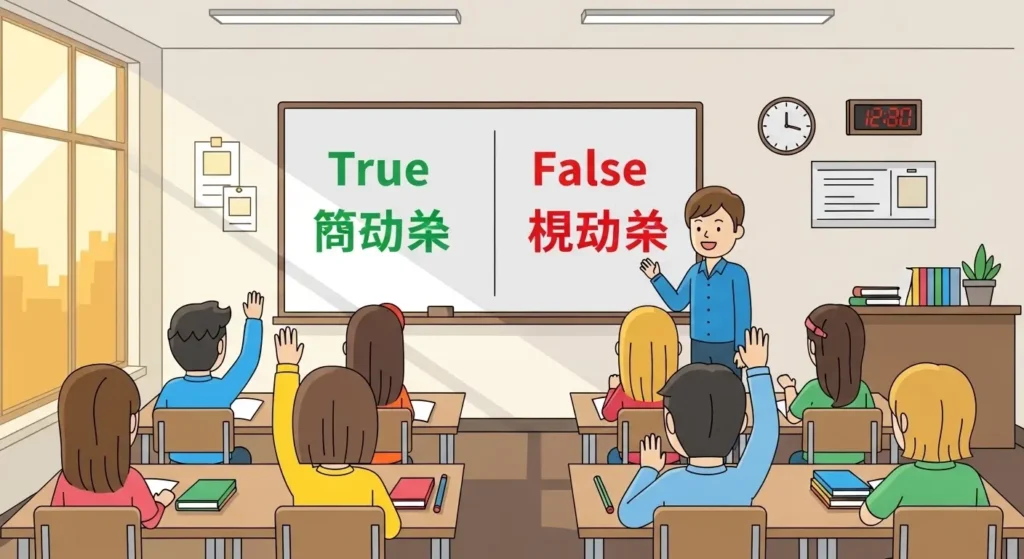
Have you ever seen a question that asks, “True or False?” It looks simple, yet many people pause. They wonder: What exactly does it mean? When should I use it? This keyword is very common in quizzes, exams, surveys, and even daily conversations.
People search for “true or false” because they want a quick, clear answer format. It helps test knowledge in a fast and easy way. But confusion still happens. Some people mix it with opinion questions. Others use it in the wrong context.
This guide will clear everything. You will learn what true or false means, where it comes from, and how to use it correctly. You will also see real-life examples and common mistakes. By the end, you will use this phrase with confidence in both formal and casual situations.
True or False – Quick Answer
“True or False” is a question format. It asks if a statement is correct (true) or incorrect (false).
- True = correct or real
- False = wrong or not real
Example:
- The sun rises in the east. → True
- Fish can live on land. → False
It is mostly used in:
- Exams
- Quizzes
- Surveys
- Learning apps
Salvadoran or Salvadorian: Which Spelling Is Correct ?
The Origin of True or False
The words “true” and “false” come from old English and Latin roots.
- True comes from Old English trēowe, meaning faithful or real
- False comes from Latin falus, meaning wrong or deceptive
This format became popular in education. Teachers needed a quick way to test knowledge. So, they used simple statements with two choices: true or false.
There is no spelling difference here. The phrase stays the same in all forms of English.
British English vs American English Spelling
Unlike many words, “true or false” does not change in British or American English.
Comparison Table
| Feature | British English | American English |
| Spelling | True or False | True or False |
| Usage | Same | Same |
| Meaning | Same | Same |
👉 This phrase is universal. No spelling confusion exists.
Separate or Seperate: Which Spelling Is Correct ?
Which Spelling Should You Use?
You should always use “true or false” exactly like this.
- US audience → Use “true or false”
- UK audience → Use “true or false”
- Global audience → Use “true or false”
There is no variation. It is simple and standard everywhere.
Common Mistakes with True or False
Many people misuse this format. Here are common mistakes:
❌ Asking opinion-based questions
- Do you like pizza? True or False → ❌ Wrong
✔ Use only for facts
❌ Writing unclear statements
- Cars are fast → ❌ Too vague
✔ Be specific: All cars run on electricity
❌ Mixing with multiple choice
- True/False should have only 2 options
❌ Not checking facts
- Always ensure the statement is clearly true or false
True or False in Everyday Examples
📧 Emails
- Please confirm: The meeting is at 10 AM. True or False?
📰 News
- Fact check: This viral claim is false.
📱 Social Media
- Quiz time! Cats can see in total darkness. True or False?
📄 Formal Writing
- Used in exams, reports, and training tests
True or False – Google Trends & Usage Data
The keyword “true or false” is popular worldwide.
- High use in education (schools, universities)
- Common in online quizzes and apps
- Used in fact-checking content
Popularity by Region
- USA → High usage in education tools
- UK → Common in exams
- India & Pakistan → Widely used in school tests
Usage Context
| Context | Usage Level |
| Education | Very High |
| Social Media | High |
| News Fact-Checking | Medium |
| Casual Chat | Low |
Comparison Table (Keyword Variations)
| Phrase | Meaning | Usage |
| True or False | Choose correct or incorrect | Exams, quizzes |
| Fact or Fiction | Real vs made-up | Media, storytelling |
| Yes or No | Agreement choice | Conversations |
| Right or Wrong | Correctness check | General use |
FAQs
1. What does “true or false” mean?
It asks if a statement is correct or incorrect.
2. Where is “true or false” used?
It is used in quizzes, exams, and surveys.
3. Is “true or false” the same worldwide?
Yes, it has the same spelling and meaning everywhere.
4. Can I use it for opinions?
No. It should only be used for facts.
5. Why is it popular in exams?
Because it is quick and easy to answer.
6. What is the opposite of true?
The opposite of true is false.
7. Is it formal or informal?
It can be both, depending on context.
Conclusion
The phrase “true or false” is simple but powerful. It gives a clear choice between right and wrong. That is why it is widely used in education and online content. Unlike many English terms, it has no spelling differences. It stays the same in British and American English.
The key to using it well is clarity. Always write clear statements. Make sure they are factual, not opinion-based. Avoid confusing or vague wording. When used correctly, this format saves time and improves understanding.
Whether you are a teacher, student, or content creator, true or false is a helpful tool. It makes learning fast and testing easy. Use it wisely, and your communication will become clearer and more effective.

Hi, I’m Henry James, the author behind GrammarTribe.com. I’m passionate about the English language and specialize in grammar, helping readers understand complex rules in a simple, clear way. Over the years, I’ve dedicated myself to creating content that makes learning grammar practical, fun, and accessible for everyone. If you’re a student, professional, or language enthusiast.
Through GrammarTribe.com, I share tips, guides, and examples to help people write confidently and correctly. My goal is to make grammar less intimidating and more useful in everyday writing, emails, social media, and professional communication. Writing and teaching grammar isn’t just my profession — it’s my passion.
When I’m not writing, I enjoy reading, exploring language trends, and discovering new ways to make English learning engaging and easy. My mission is to empower readers to communicate clearly and confidently, one grammar tip at a time.