
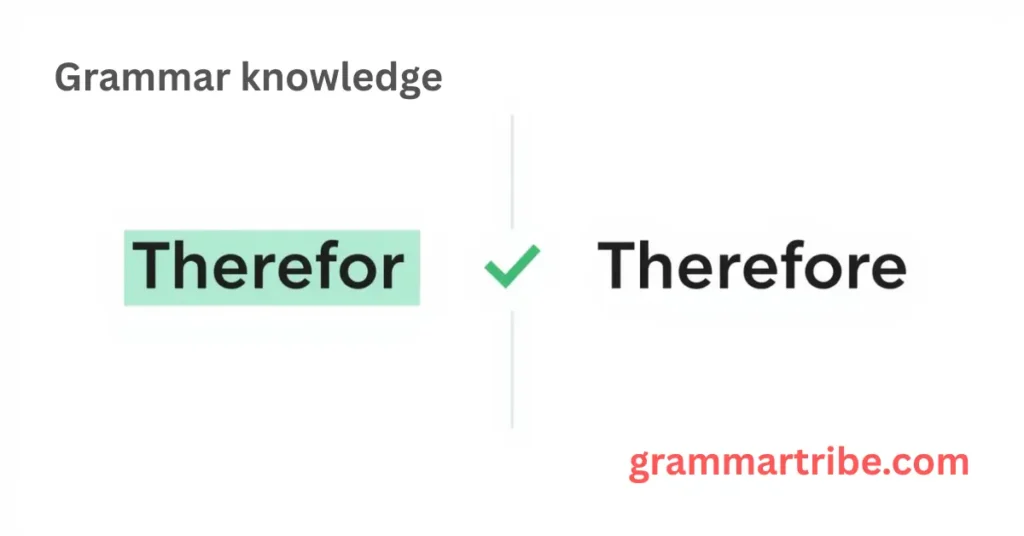
Have you ever paused while writing and wondered whether “therefor” or “therefore” is the correct word? You’re not alone. This confusion is one of the most common grammar issues in English writing. Both words look almost identical, sound similar, and even come from related roots. Yet, they have very different meanings and uses.
People search for “therefor or therefore” because using the wrong one can change the meaning of a sentence or make it sound unprofessional. Students, bloggers, SEO writers, and even native speakers often mix them up—especially in formal writing like essays, emails, or articles.
This article solves that confusion once and for all. You’ll get a quick answer, a deeper explanation of each word’s origin, clear differences between British and American English usage, and real-life examples you can copy with confidence. By the end, you’ll know exactly when to use “therefore” and when “therefor” is correct, without second-guessing yourself.
Therefor or Therefore – Quick Answer
“Therefore” means as a result or for that reason.
“Therefor” means for that (usually referring to payment or compensation).
Examples:
- ✅ It was raining; therefore, we stayed inside.
- ✅ He completed the work and was paid therefor.
Quick tip:
If you mean a result, use therefore.
If you mean in exchange for something, use therefor.
The Origin of Therefor or Therefore
Both words come from Old English and are formed by combining “there” with another word.
- Therefore = there + fore (meaning because of that or from that cause)
- Therefor = there + for (meaning for that thing)
Over time, “therefore” became extremely common in both spoken and written English. “Therefor,” however, became rare and is now mostly used in legal, formal, or old-fashioned contexts. The spelling difference exists because the words evolved with different grammatical functions, not because of regional spelling rules.
British English vs American English Spelling
There is no spelling difference between British and American English for these words. The difference is in usage frequency, not spelling.
| Aspect | British English | American English |
| Therefore | Very common | Very common |
| Therefor | Rare, legal use | Rare, legal use |
| Meaning difference | Same | Same |
✅ Both regions use “therefore” for results and logic.
⚠️ “Therefor” is uncommon in everyday writing in both.
Which Spelling Should You Use?
Your choice depends on meaning and audience, not location.
- US audience: Use therefore in almost all cases.
- UK/Commonwealth audience: Same rule—therefore is standard.
- Global or SEO writing: Always use therefore, unless writing legal or contractual text.
👉 If you’re unsure, therefore is correct 99% of the time.
Common Mistakes with Therefor or Therefore
Here are frequent errors writers make:
❌ I was tired, therefor I slept early.
✅ I was tired, therefore I slept early.
❌ He broke the rules and was punished therefor. (sounds odd in modern writing)
✅ He broke the rules and was punished for it.
❌ Using therefor instead of therefore in essays or blogs.
✅ Replace therefor with therefore unless payment or exchange is meant.
Therefor or Therefore in Everyday Examples
Emails
- The deadline passed; therefore, the request was denied.
News
- The policy failed to gain support; therefore, it was withdrawn.
Social Media
- I forgot my charger, therefore my phone died.
Formal Writing
- The terms were violated; compensation was awarded therefor.
Therefor or Therefore – Google Trends & Usage Data
Search data shows that “therefore” is searched hundreds of times more than “therefor” worldwide.
- Top countries searching “therefore”: US, UK, India, Pakistan, Canada
- “Therefor” searches: Mostly legal or academic contexts
This proves that therefore dominates modern English, while therefor survives mainly in formal documents.
Comparison Table: Therefor vs Therefore
| Feature | Therefor | Therefore |
| Meaning | For that | As a result |
| Common usage | Rare | Very common |
| Writing type | Legal/formal | Everyday, academic |
| SEO-friendly | ❌ | ✅ |
| Spoken English | Almost never | Very common |
FAQs: Therefor or Therefore
1. Is “therefor” a real word?
Yes, but it is rare and mostly used in legal writing.
2. Can I use “therefor” instead of “therefore”?
No. They have different meanings.
3. Which one is more correct in modern English?
Therefore is correct in most situations.
4. Is there a British or American difference?
No. Both use the same spelling and meanings.
5. Is “therefor” outdated?
It’s not wrong, but it sounds old-fashioned.
6. Should I avoid “therefor” in blogs?
Yes. Use therefore or simpler phrases.
7. What’s an easy replacement for “therefor”?
“For it” or “in return” works better.
Conclusion
The confusion between therefor or therefore comes from how similar the words look, not how they function. In simple terms, “therefore” is about results and reasons, while “therefor” refers to exchange or compensation. Modern English strongly favors therefore, making it the safest and most professional choice for essays, blogs, emails, and SEO content.
Unless you’re writing legal or historical text, you’ll almost never need therefor. If your sentence answers the question “what happened because of this?”, then therefore is the correct word. If it answers “for what?”, then therefor may apply.
Remember this rule, and you’ll avoid a common grammar mistake that even experienced writers make. Clear word choice builds trust, improves readability, and makes your writing sound confident and polished.

I am James Wilson, an author at GrammarTribe.com, specializing in English grammar and clear communication.
I create expert, reliable content to help learners write with confidence and accuracy.