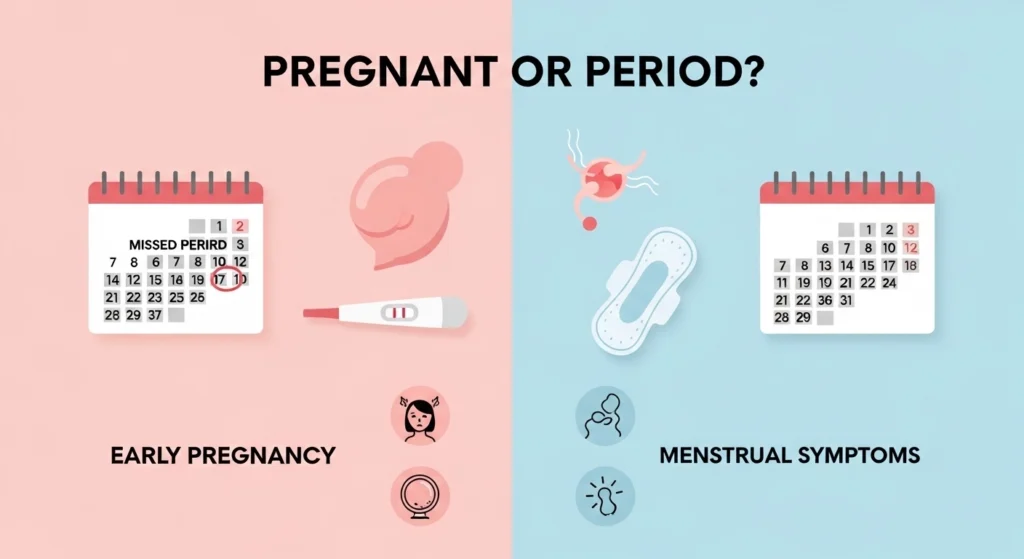
Many people often wonder whether they are pregnant or just having their period. The symptoms of early pregnancy and menstruation can be very similar, such as cramps, mood swings, and breast tenderness.
This confusion leads many to search for clear guidance online. Understanding the difference is crucial for health and planning.In this article, we will provide a simple, step-by-step guide on how to distinguish between being pregnant or on your period, the origins of these terms, common mistakes, and tips for correct usage in everyday life.
We’ll also include global insights, trends, and professional advice, helping you quickly get the answers you need.
Pregnant or Period – Quick Answer
Quick Answer:
- Pregnant: Usually no period, missed menstrual cycle, nausea, frequent urination, breast changes.
- Period: Regular bleeding, cramping, mood swings, short-term symptoms, predictable cycle.
Example:
- If your period is late and you notice fatigue or nausea, you might be pregnant.
- If bleeding occurs as usual with cramping, it’s likely your period.
The Origin of “Pregnant or Period”
- Pregnant: Comes from the Latin praegnans, meaning “with child.”
- Period: From Greek periodos, meaning “a recurring cycle or time.”
These words have been used for centuries to describe natural biological processes. The confusion often arises because early pregnancy can mimic period symptoms.
British English vs American English Spelling
The terms pregnant and period are spelled the same in both British English and American English. There’s no variation, unlike words like “colour/ color” or “favour/ favor.”
| Term | British English | American English | Notes |
| Pregnant | Pregnant | Pregnant | No difference |
| Period | Period | Period | No difference |
Which Spelling Should You Use?
Since pregnant and period are consistent across English dialects, you can use them globally.
- US audience: Standard spelling works.
- UK/Commonwealth audience: Same spelling applies.
- Global use: No confusion; universally recognized terms.
Common Mistakes with “Pregnant or Period”
- Confusing spotting with a full period.
- Mistaking nausea from diet or stress for pregnancy.
- Using informal terms like “late monthly” instead of period.
Correction Example:
- ❌ “I think I am late monthly.”
- ✅ “I think I might be pregnant or my period is late.”
Pregnant or Period in Everyday Examples
- Email: “I may be pregnant or my period is late; should I schedule a test?”
- News Article: “Early signs of pregnancy vs period are often misunderstood.”
- Social Media: “Feeling crampy… is this my period or am I pregnant?”
- Formal Writing: “It is important to distinguish between pregnancy and menstruation for accurate medical advice.”
Pregnant or Period – Google Trends & Usage Data
Search trends indicate high interest in the keyword “pregnant or period” in:
- United States – Peaks around 18–34 age group.
- India – High searches related to symptoms and home tests.
- UK & Australia – Similar patterns during late menstrual cycles.
Keyword Comparison Table
| Variation | Meaning | Usage Example |
| Pregnant or period | General inquiry about symptoms | “Am I pregnant or is it my period?” |
| Period or pregnant | Reverse phrasing | “Is this my period or am I pregnant?” |
| Early pregnancy signs | Focus on symptoms | “Early pregnancy signs vs period cramps” |
| Missed period | Related concept | “I have a missed period; could it be pregnancy?” |
FAQs
1. Can I be pregnant and have my period?
No, menstruation typically stops during pregnancy, but light spotting can occur.
2. How soon can I know if I am pregnant?
A home pregnancy test can detect pregnancy 1–2 weeks after a missed period.
3. Why do early pregnancy symptoms feel like period symptoms?
Both involve hormonal changes causing cramps, fatigue, and mood swings.
4. Can stress affect my period or pregnancy symptoms?
Yes, stress can delay periods and mimic early pregnancy symptoms.
5. Should I see a doctor if I’m unsure?
Absolutely. A blood test or professional check can confirm pregnancy.
6. Can exercise affect period symptoms?
Yes, heavy exercise can alter cycles but does not indicate pregnancy.
7. Are online quizzes reliable for “pregnant or period” questions?
They are not 100% reliable; always use medical tests for confirmation.
Conclusion
Knowing whether you are pregnant or on your period is essential for health, planning, and peace of mind. While early pregnancy and menstruation share similar symptoms, careful observation, home tests, and medical advice can clarify the situation.
The terms themselves are universal in English, with no spelling differences across regions. Using clear, professional language helps avoid confusion in conversation, writing, and online searches. Remember: late period + unusual symptoms = check for pregnancy, while regular cycles indicate menstruation. By understanding signs, symptoms, and proper terminology, you can confidently identify whether it’s pregnant or period.

Hi, I’m Henry James, the author behind GrammarTribe.com. I’m passionate about the English language and specialize in grammar, helping readers understand complex rules in a simple, clear way. Over the years, I’ve dedicated myself to creating content that makes learning grammar practical, fun, and accessible for everyone. If you’re a student, professional, or language enthusiast.
Through GrammarTribe.com, I share tips, guides, and examples to help people write confidently and correctly. My goal is to make grammar less intimidating and more useful in everyday writing, emails, social media, and professional communication. Writing and teaching grammar isn’t just my profession — it’s my passion.
When I’m not writing, I enjoy reading, exploring language trends, and discovering new ways to make English learning engaging and easy. My mission is to empower readers to communicate clearly and confidently, one grammar tip at a time.