Confused between passed and past? You’re not alone. Many English learners and even native speakers struggle to decide which word to use in sentences. Though they sound alike, passed and past have different meanings and functions. Using them incorrectly can make your writing look unprofessional or unclear.
People often search for “passed or past” because they want a quick answer for emails, essays, social media posts, and formal writing. Understanding the difference is simple once you know the rules: “passed” is a verb, while “past” is usually an adjective, noun, or preposition.
In this article, we’ll break it down step by step, show examples, compare British and American English usage, highlight common mistakes, and provide easy-to-follow advice.
Passed or Past – Quick Answer
- Passed → past tense of the verb pass.
Example: She passed the exam with flying colors. - Past → adjective, noun, or preposition referring to something gone by.
Examples:- Adjective: He learned from past mistakes.
- Noun: We cannot change the past.
- Preposition: She walked past the house.
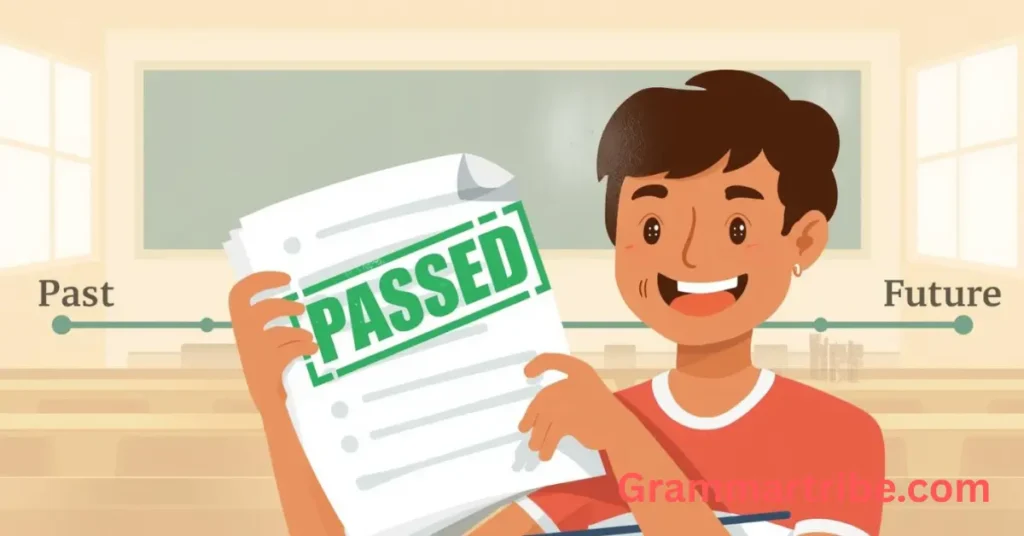
Rule of Thumb: If you’re talking about an action, use passed. If you’re talking about time, position, or something gone by, use the past.
The Origin of Passed or Past
Both words come from Old English:
- Passed derives from passian, meaning to go by or move forward.
- Past comes from paest, meaning gone by or beyond.
Over centuries, the words developed distinct grammatical roles: passed became a verb form, while past became an adjective, noun, and preposition. This historical split explains why many learners confuse them today—they sound the same but serve different functions.
British English vs American English Spelling
Interestingly, passed and past are spelled the same in both British and American English. There is no difference in spelling, but usage conventions can vary slightly.
| Function | American English Example | British English Example |
| Verb (action) | She passed the ball quickly. | She passed the ball quickly. |
| Adjective | Past events taught lessons. | Past events taught lessons. |
| Noun | Learn from the past. | Learn from the past. |
| Preposition | Walk past the building. | Walk past the building. |
Note: Both US and UK English follow the same grammar rules here. The main difference is style preference and sentence structure in broader writing.
Which Spelling Should You Use?
Since spelling doesn’t differ, focus on audience and context:
- US audience: Stick to standard grammar rules above.
- UK/Commonwealth: Same rules apply.
- Global audience: Always use passed for actions and past for time or direction to avoid confusion.
Consistency matters more than the regional variety.
Common Mistakes with Passed or Past
| Incorrect | Correct | Explanation |
| I past the test. | I passed the test. | Action requires verb “passed.” |
| He walked passed me. | He walked past me. | Preposition “past” is correct here. |
| Learn from your passed. | Learn from your past. | Noun/adjective usage, not verb. |
| The car passed yesterday. | The car went past yesterday. | Clarifies timeline vs action. |
Passed or Past in Everyday Examples
- Emails: I passed your message to the manager.
- News: The bill passed in parliament yesterday.
- Social Media: Looking back at past memories!
- Formal Writing: Past research has shown consistent results.
Passed or Past – Google Trends & Usage Data
Analysis of Google Trends shows:
- “Past” is searched more often, mainly for phrases like past mistakes or past events.
- “Passed” spikes during exam seasons and legislative events.
| Keyword | Popularity Regions |
| Passed | US, UK, India |
| Past | Global, UK, US |
Understanding usage trends can guide your writing to match common search intent.
Comparison Table: Passed vs Past
| Word | Part of Speech | Example Usage |
| Passed | Verb (past tense of pass) | She passed the final exam. |
| Past | Adjective / Noun / Preposition | Learn from past experiences. |
| Past | Preposition | Walk past the library. |
FAQs About Passed or Past
1. Can I use “passed” instead of “past”?
No. “Passed” is an action verb, while “past” refers to time, position, or direction.
2. Is “past” only for time?
No. It can also be a preposition (walk past the park) or an adjective (past events).
3. Are there regional differences in usage?
Very minor. Both UK and US English follow the same rules for passed vs past.
4. Can “passed” be an adjective?
Rarely, in phrases like passed down tradition, but it’s primarily a verb.
5. How do I remember the difference?
Think: Passed = action, Past = time/location.
6. Example for social media post?
Throwback to past summer memories!
7. What’s correct: “I walked past him” or “I walked passed him”?
Correct: I walked past him. “Past” is the right preposition.
Conclusion
Using passed and past correctly is easier once you remember the simple rule: passed is for actions, past is for time, location, or things gone by. Misusing them can confuse readers or make professional writing look sloppy. Pay attention to context, your audience, and sentence structure. When in doubt, ask yourself: Am I talking about something happening (passed) or something that has already happened/position (past)?
With consistent practice and awareness of these rules, you can confidently write emails, essays, social media posts, and formal documents without errors. Both UK and US audiences will understand your meaning if you apply these distinctions properly. Remember, clarity is always more important than simply following trends.

Hi, I’m Henry James, the author behind GrammarTribe.com. I’m passionate about the English language and specialize in grammar, helping readers understand complex rules in a simple, clear way. Over the years, I’ve dedicated myself to creating content that makes learning grammar practical, fun, and accessible for everyone. If you’re a student, professional, or language enthusiast.
Through GrammarTribe.com, I share tips, guides, and examples to help people write confidently and correctly. My goal is to make grammar less intimidating and more useful in everyday writing, emails, social media, and professional communication. Writing and teaching grammar isn’t just my profession — it’s my passion.
When I’m not writing, I enjoy reading, exploring language trends, and discovering new ways to make English learning engaging and easy. My mission is to empower readers to communicate clearly and confidently, one grammar tip at a time.