Choosing between a Mac or PC is one of the most common dilemmas for tech users today. Many people search for this because both options offer unique benefits, and understanding the difference can save time, money, and frustration.
If you’re buying a new computer for work, gaming, or school, knowing which one suits your needs is essential. Some users are confused about the terms themselves, while others want to know the practical differences in performance, software, and usability. This guide will give a clear answer, compare features, and help you make an informed choice.
Mac or PC – Quick Answer
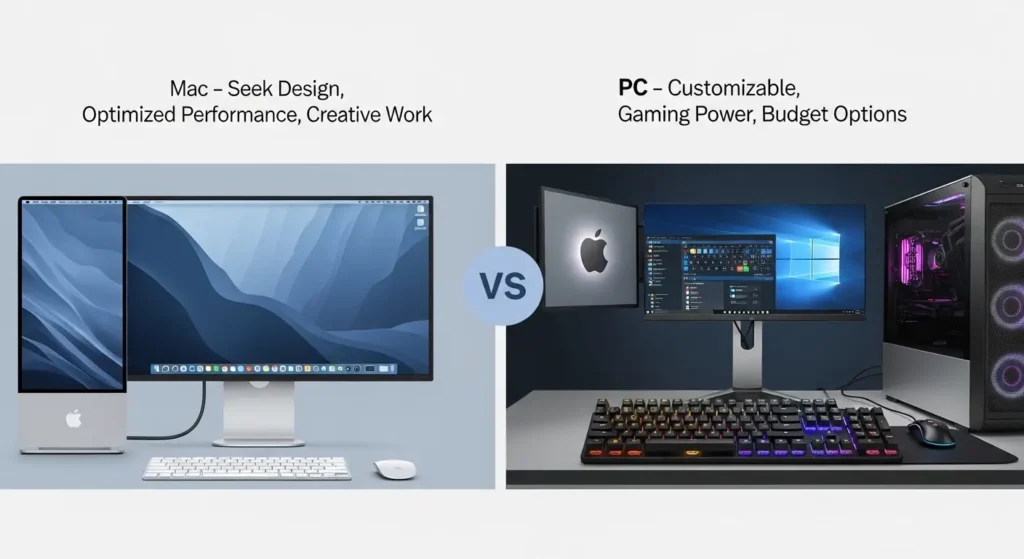
A Mac is a computer made by Apple, known for its sleek design, stable operating system (macOS), and integration with other Apple products. A PC (Personal Computer) usually runs Windows or Linux and is made by various manufacturers, offering more hardware variety and affordability.
Example:
- If you prefer creative software like Final Cut Pro, choose a Mac.
- If you need a gaming machine with upgradeable parts, a PC is often better.
The Origin of Mac or PC
The term Mac comes from Macintosh, introduced by Apple in 1984. PC stands for Personal Computer, a term popularized in the 1980s when IBM PCs became widely available. While Macs are associated with Apple’s design and ecosystem, PCs refer to a broader category of computers that follow the IBM-compatible standard.
British English vs American English Spelling
Interestingly, Mac or PC does not change spelling between British and American English. The terms are proper nouns and remain the same globally.
| Term | UK Spelling | US Spelling | Notes |
| Mac | Mac | Mac | Always capitalized; brand name |
| PC | PC | PC | Acronym for Personal Computer |
Which Spelling Should You Use?
Since both Mac and PC are proper nouns, spelling does not vary by region. Use Mac for Apple devices and PC for Windows/Linux machines. This rule applies in the US, UK, and worldwide.
Common Mistakes with Mac or PC
- Writing Macintosh instead of Mac in casual contexts – usually, Mac is sufficient.
- Calling all computers “PCs” when referring specifically to Windows machines – Macs are not PCs in common usage.
- Confusing the operating system with the hardware (e.g., Windows is software, PC is hardware).
Mac or PC in Everyday Examples
Emails: “I will send the file from my Mac today.”
Social Media: “Just upgraded my PC for better gaming performance!”
News Articles: “Apple’s new MacBook outperforms most PCs in speed tests.”
Formal Writing: “Organizations must decide between Mac and PC for office efficiency.”
Mac or PC – Google Trends & Usage Data
Globally, PC searches dominate due to Windows popularity. Mac searches spike in the US, Canada, and Australia. Users mostly search for comparisons, reviews, and purchase guidance.
| Country | Mac Popularity | PC Popularity |
| USA | High | Medium |
| UK | Medium | High |
| India | Low | High |
| Australia | Medium | Medium |
FAQs
1. Is a Mac better than a PC?
It depends on your needs. Macs are great for creative work; PCs are better for gaming and customization.
2. Can I run Windows on a Mac?
Yes, via Boot Camp or virtualization software like Parallels.
3. Are PCs cheaper than Macs?
Generally, yes. PCs offer more budget options and hardware flexibility.
4. Do Macs get viruses?
Less frequently than PCs, but they are not immune to malware.
5. Which is better for students?
Both work, but Macs excel in multimedia courses, while PCs are cost-effective for general use.
6. Can software differences affect my choice?
Yes, some professional software like Final Cut Pro is Mac-exclusive, while many games run better on PCs.
7. Is it hard to switch from Mac to PC?
Not really, but the user interface and system shortcuts differ, so there is a learning curve.
Conclusion
Choosing between a Mac or PC comes down to personal needs, budget, and software preferences. Macs provide a seamless, secure experience with strong support for creative tasks, while PCs offer flexibility, affordability, and superior gaming options.
Both are reliable, but understanding their differences will help you pick the right machine for work, study, or play. Always consider your ecosystem, software needs, and long-term goals before investing. Remember, the choice is not just about hardware—it’s about which system fits your lifestyle best.

Hi, I’m Henry James, the author behind GrammarTribe.com. I’m passionate about the English language and specialize in grammar, helping readers understand complex rules in a simple, clear way. Over the years, I’ve dedicated myself to creating content that makes learning grammar practical, fun, and accessible for everyone. If you’re a student, professional, or language enthusiast.
Through GrammarTribe.com, I share tips, guides, and examples to help people write confidently and correctly. My goal is to make grammar less intimidating and more useful in everyday writing, emails, social media, and professional communication. Writing and teaching grammar isn’t just my profession — it’s my passion.
When I’m not writing, I enjoy reading, exploring language trends, and discovering new ways to make English learning engaging and easy. My mission is to empower readers to communicate clearly and confidently, one grammar tip at a time.