Many people often confuse allergies and the common cold. Both can make you sneeze, have a runny nose, or feel tired. But knowing the difference is important so you can treat your symptoms correctly. Searching for “allergies or cold” is common because people want to know whether they need allergy medicine or just rest and fluids.
Understanding the signs can prevent unnecessary doctor visits or overuse of medications. In this article, we’ll explain the quick ways to differentiate between allergies and colds, their origins, spelling nuances, common mistakes, and everyday examples. By the end, you’ll know exactly how to identify which one is affecting you.
Allergies or Cold – Quick Answer
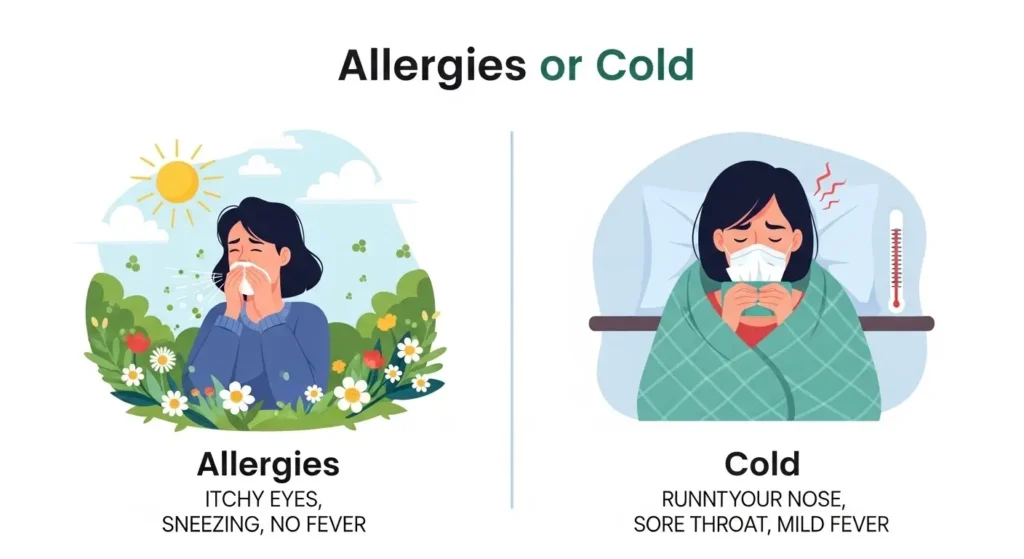
Allergies are caused by the immune system reacting to substances like pollen, dust, or pet dander. Common symptoms include:
- Sneezing
- Itchy eyes and nose
- Clear, watery mucus
Cold is caused by viruses and often lasts 3–14 days. Symptoms include:
- Runny or congested nose
- Sore throat
- Mild fever
- Fatigue
Example: If your eyes are itchy and your symptoms come at the same time every year, it’s likely allergies. If you have a mild fever and body aches, it’s more likely a cold.
The Origin of Allergies and Cold
The word “allergy” comes from the Greek words allos (other) and ergon (reaction), meaning the body reacts differently to certain substances.
The term “cold” refers to the “common cold,” first described in the 16th century to describe the chilliness that often accompanied symptoms of nasal congestion and sneezing.
British English vs American English Spelling
Most medical terms like allergy and cold are spelled the same in British and American English. However, general rules often differ for other related terms:
| Term | British English | American English |
| Allergy | allergy | allergy |
| Cold | cold | cold |
| Hay fever | hay fever | hay fever |
| Medication | medicine | medicine |
Note: Usage and context may vary, but spelling is consistent for these words.
Which Spelling Should You Use?
- US Audience: Standard spellings like allergy and cold work perfectly.
- UK/Commonwealth Audience: Same spelling applies, but “hay fever” is more commonly used than “allergic rhinitis.”
- Global Audience: Stick with the standard spellings to avoid confusion.
Common Mistakes with Allergies or Cold
- Confusing allergies with cold due to similar symptoms.
- Using “cold” for seasonal allergies. Correct: “I have allergies this spring”.
- Overusing antibiotics for allergy symptoms (antibiotics do not treat allergies).
- Mispronouncing “allergy” as “allergi” or “al-er-gee” incorrectly.
Allergies or Cold in Everyday Examples
Emails: “I won’t be in the office today due to a cold.”
News: “Seasonal allergies are on the rise this spring.”
Social Media: “Sneezing nonstop 😩—allergies or cold?”
Formal Writing: “Differentiating between viral infections and allergic reactions is crucial in clinical practice.”
Allergies or Cold – Google Trends & Usage Data
- Searches for “allergies or cold” spike during spring and fall when pollen levels are high.
- The US, UK, Canada, and Australia show consistent interest.
- Allergies are more commonly searched in spring; cold-related queries peak in winter.
| Keyword Variation | Global Interest |
| Allergies vs Cold | High in US & UK |
| Allergy symptoms | High in Canada & Australia |
| Cold symptoms | High in winter globally |
FAQs
1. How can I tell if I have allergies or a cold?
Look for itchy eyes and symptom duration. Allergies last longer; colds resolve in 3–14 days.
2. Can allergies cause a fever?
No, fevers are usually caused by infections like colds or flu.
3. Do colds spread like allergies?
No. Allergies are not contagious; colds are viral and can spread.
4. Can I take the same medicine for both?
No. Allergy medicine (antihistamines) helps allergies; cold medicine targets viral symptoms.
5. Are allergies seasonal?
Yes. Many allergies, like pollen, occur during spring and fall.
6. Can stress trigger allergy-like symptoms?
Stress may worsen symptoms but doesn’t cause allergies directly.
7. Should I see a doctor if unsure?
Yes, especially if symptoms persist or worsen. A doctor can provide testing.
Conclusion
Understanding the difference between allergies and cold is crucial for proper treatment. Allergies are caused by immune reactions to triggers, while colds are viral infections. Symptoms may overlap, but signs like itchy eyes or fever can help you differentiate.
Using the correct terminology in emails, news, and social media ensures clarity. For most readers, standard spellings are sufficient, whether in the US, UK, or globally. Monitoring trends and seasonal patterns can also help anticipate symptoms and take preventive measures. Remember, allergies are not contagious, but colds can spread. Proper identification leads to faster relief and avoids unnecessary medications. By applying these insights, you can confidently answer the common question: allergies or cold?

I am James Wilson, an author at GrammarTribe.com, specializing in English grammar and clear communication.
I create expert, reliable content to help learners write with confidence and accuracy.